When I was three months old, my grandmother (“grammy” as we affectionately called her) gave me a white teddy bear for Christmas, outfitted with a matching red beanie and scarf. The bear and I quickly became inseparable, even if it took me a few months to grow to its size.
For reasons that will forever remain a mystery, I named him Bill. Not Teddy, or Buddy, or even Billy. Bill. An old man’s name. (Is his true name William? We will never know.) All I know about my thought process as a three-year-old was that I most likely chose that name at random, or based on a TV character long since forgotten.
Regardless of how Bill was named, he (it feels weird to call Bill an “it”) was far and away my favorite stuffed animal growing up, even after I lost his hat and scarf. Then again, the hat and scarf were a suffocation hazard, so maybe they were taken from me.
A couple weeks ago, I had the opportunity to have my patient story recorded by Annie Brewster at Health Story Collaborative. The end product will be a 10-15 minute audio clip chronicling my journey over the last nine years, from my first symptoms to present day. It was a fantastic experience, and I’m glad I reached out to Annie on a whim after watching her TED talk.
Towards the end of our call, I asked about CommonHeath, a healthcare blog run by WBUR, Boston’s NPR station. While researching Annie’s background before our call, I noticed that she had written several pieces on the site, and was involved with curating patient stories. I asked her if my story would be a good candidate for CommonHealth, and she said it would be.
Encouraged, I reached out to Carey Goldberg, the editor of CommonHealth. One thing led to another, and, with the help of Carey and another editor, Ginger Marshall, we decided I would write about my thought process in accepting that I needed to get a wheelchair.
It’s a difficult subject to write about. First off, it’s a heavy topic, fraught with emotion. Second, it is difficult to convey, in 1,200 words, what it feels like to come to this acceptance. I could write 10,000 words on the topic and it would be incomplete.
Difficulties aside, I am proud of how the piece came out. The title isn’t my favorite, but I understand why it is so straightforward and blunt. It clearly states what the article is about, in no uncertain terms. As an opinion piece, you are either interested in reading more, or you’re not.
My article on the CommonHealth website.
It was a thrill to see my article on the CommonHealth website and the WBUR Facebook page, sites that thousands of people frequent on a daily basis. More importantly, I was heartened by the positive reaction of other patients, and how those going through a similar situation could relate to what I wrote. The truth is, I was initially reluctant to write the article, mainly because it is a touchy and emotionally-charged subject. I know how I feel about the experience, but it is difficult to put into words. What if someone takes something I wrote the wrong way, or reads into it something I didn’t intend? Despite my initial hesitation, I decided it was a risk worth taking.
The article had a good run on social media, but, like everything else on the internet, I figured it would fade away into obscurity.
Or so I thought.
Yesterday, around midday, I was checking the WordPress app on my iPhone, casually glancing at Sidewalks and Stairwells’ page views for the day. On a good day, I usually get 20-25 views on my website. I checked the app: 200 views. I wish you could have seen my face!
Initially, I thought my site was being flooded by bot traffic. Then I saw a comment on my front page mentioning they found my site via NPR, and it hit me – my post got picked up by NPR’s social media accounts.
I checked, and there it was at the top of the NPR Facebook page, which has nearly 6 million followers. This article that I wrote, partly for my own healing, was now being read by millions of people.
The comments started flooding in. I was hopeful my article would have a positive impact on people, but part of me was nervous that there might be some negative, troll-ish comments that would make me regret being so vulnerable (I know, I know, I should never read the comments section). Fortunately, there were only a couple bad ones, and they were so comically off-base that I found them more amusing than anything. You truly can never please everyone.
By the end of the day, I had over 1,100 views. Yesterday, I had 450 more. 1,500+ in 2 days. Not bad!
I have been hoping and praying for a day where my blog, my little slice of the internet, gets seen by a wide audience. I don’t want this because I want to become famous (I am an introvert after all), rather, my hope is that the more people who read this site, the more people I might be able to help. I share my story, warts and all, because I want it to resonate with others.
I am grateful for the outpouring of support by complete strangers around the world. Overwhelmingly, the response to my article was positive. Patients shared their own struggles, and readers who were not disabled valued the perspective I brought to the table. If I can use my journey, which was once an intolerable nightmare, to inspire and inform, that is a good thing.
I hope yesterday is just the beginning, the big break I have been waiting for. I am only one person, but I know the impact one person, with the right message, at the right time, can have on someone’s life. I am here to pay it forward.
This past Tuesday, I had the honor of sharing my patient story at Spaulding Rehabilitation Hospital in Boston, one of the great medical facilities in the country. In my talk, “Partnering with Patients on the Road to Acceptance”, I chose to focus primarily on my interactions with various healthcare providers over the years. Just like anyone else dealing with a chronic disease that involves a revolving door of doctor’s visits and specialists, I had many heartwarming and nightmarish stories to share with the audience.
It checks out at 115 pages, single-spaced, give or take a few placeholders and incoherent ramblings.
This is a big deal for me. I’ve attempted to write my story many times, always failing. This time, though, is different. I am motivated, and it just feels like the right time. My transition into a wheelchair is nearly complete. It is a natural bookend to my journey.
The key to writing a book, I’ve found through trial and error, is to take a seemingly insurmountable project and break it down into manageable pieces. My immediate goal was to write out, chronologically, all the important events that have taken place in my life between 2008 and the present day. I have accomplished that. The next step is to go through what I’ve written again, and start to turn it into a story. Then in subsequent steps, I’ll add more detail, quotations, and finally, give it one final run-through.
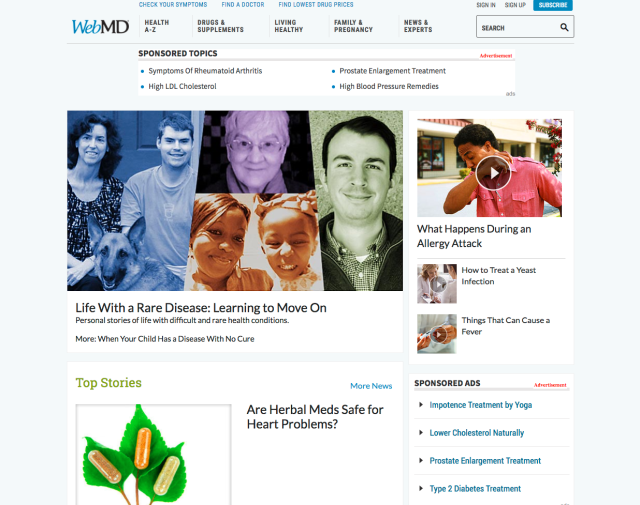
Today I am featured on the WebMD website for Rare Disease Day! It is very exciting. I was interviewed a few weeks back (many thanks to NORD for connecting me) for a series they are running about patients living with a rare disease.
The interview gave a brief overview of my condition, my patient journey, and advice I’d give to others who are newly diagnosed with an adult-onset disease. I always enjoy being able to use my story to raise awareness and offer advice to new audiences.
Today, February 28th, is Rare Disease Day around the world. Celebrated annually on the last day of February, it is a day to celebrate the millions of individuals living with rare disorders who persevere and thrive against tremendous odds. The truth is, many of these diseases (there are over 6,000) are so rare, no one has ever heard of them, including doctors and those who work in the life sciences industry. Consequently, rare diseases get virtually no research funding when compared to the more common diseases that affect millions of people. Even with government incentives the funding gap is astronomical. Worse, some rare diseases have so few patients worldwide that it is nearly impossible to organize a foundation, raise money, and offer support and resources. This only magnifies an already frustrating situation.
That’s what makes Rare Disease Day so important. It is a day where all rare disease patients, collectively, come together as one community. It provides a platform to impart on lawmakers, scientists, and the general public how important it is to support rare disease research, and to raise awareness for some of these conditions. Around the world, ceremonies take place in civic spaces and government buildings, allowing for a diverse set of stakeholders to see firsthand the human impact of living with a rare disease.
I was honored to be part of the festivities last Rare Disease Day at the Massachusetts State House in Boston. I was invited by MassBio to be a patient speaker in the celebration, and gave a short speech in front of over 400 people. It was both thrilling and therapeutic. I met many wonderful patients with other rare diseases, along with advocates and scientists committed to finding treatments and cures. Several people had never heard of my condition (Miyoshi Myopathy), so it was also a great opportunity to educate.
This year I will be working, so I will not be able to make it to my local ceremony in Hartford. However, my thoughts will be with those who will share their patient stories and captivate audiences around the world.
On this day, our collective disorders are not so isolating. It is hard to put into words how much that means.
Author’s Note: This is my second post in The Adversity Playbook, a series that outlines my lessons learned in dealing with adversity.
In my first lesson, I mentioned the importance of opening yourself up to others when you are feeling down or struggling with a heavy burden. I know I make it sound like it’s an easy decision, but I know firsthand how difficult it can be! I fully admit that it took me many years to open up. Looking back, I regret how long I internalized my challenges, yet I can appreciate the difficulty inherent in making the choice.
It is only once you have opened yourself up to someone that you can fully appreciate how important other people can be. Adversity is not meant to be fought in isolation. Friends and family members are a tremendous source of comfort, and confiding in them can often lift the burden right off your shoulders. What you will find is that people are thankful that you have opened up to them, and, if they are truly someone you can trust, they are more than willing to help.
But there is another group of people who can be just as helpful to you as a family member or a friend. They may not know you, but you certainly know them. They are adversity “role models” – everyday heroes whose stories you come across and that stay with you long after. Often these people leave indelible imprints on your soul, and they become your personal guides as you navigate the rough terrain of life.
In the internet age, it is so easy to find stories of other people who have lived with, or are living with, what you are going through. I can Google “muscular dystrophy” and find numerous blogs and articles about people living with muscle weakness, who understand on an intimate level what I’ve felt over the years. They know what it’s like to have dreams crushed, to experience loneliness and isolation, and to adapt to a new way of life. Yet, many of these people have learned how to forge new dreams, and live more meaningful lives than they would have otherwise. In your own situation – whether you are living with a disease, or have experienced depression, failure, or some other form of adversity – the internet can lead you to stories of others who have walked a mile in your shoes.
Forums and websites are great for connecting with similar individuals, and are useful in their own right. But what I have found especially valuable is finding specific role models – someone whose story resonates on a deep level. It can be a person specific to your situation, or it can be someone walking in a completely different pair of shoes, overcoming their own form of adversity.
You will often find that there are two different types of stories you come across. First, you have the stories that are super upbeat and talk about how inspirational the person is for overcoming their challenge that otherwise should have kept them from being a contributing member of society. You can spot these stories a mile away – I’m sure you know what I’m talking about. They come off as condescending and patronizing, and often make you feel like the person has been exploited. This happens a lot in the disability space. Oftentimes the writer or editor – usually someone unfamiliar with the person’s story going in – does not intentionally try and tell the story in that fashion. But it happens a lot, and quite honestly, stories told in this fashion aren’t all that useful to someone seeking a role model.
The second type of story – authentic storytelling – is the kind that will be most beneficial to you. I’m talking about stories that tell the good and the bad, and hold nothing back. These are usually either long-form feature pieces (in written or video form) that chronicle the subject’s journey, or are written/recorded from a first-person perspective. Personally, I want to know how the person has struggled, because when they ultimately triumph, or come to a level of peace with their situation, it feels authentic, rather than artificial. You fully contextualize their journey, and understand the steps that got them to that point.
Authenticity is crucial. You don’t want to read something and feel manipulated, or feel like the story is being used in a way to achieve some commercial gain or serve an ulterior motive. Authenticity is the driving force of this website – if I am going to put my story out there to the world, I want people to understand how it really is. I may overcome challenges, but there are days where life gets the best of me. The day I am not portraying my disease in an honest light is the day I should stop writing on here altogether.
(Quick tangent: I was part of a campaign once where my story was going to be used as part of a campaign to get people to donate money, and I immediately recoiled when I saw how my story was written by the author. In short, I was being portrayed as a helpless person suffering from a terrible disease, in need of the donor’s pity. Thankfully, I saw the first draft and refused to participate, and it never went to print. Another lesson learned!)
Our role models allow us to see that we are not alone in anything we face. It is necessary for us to find others who have made it through the dark times, and it is important to learn how they did it. Adversity happens to everyone, although we handle it in different ways. In the disease realm, where I live and operate, I often seek inspiration from people with all sorts of diseases outside of muscular dystrophy, simply because there is so much to learn from their circumstances that I can then use in my own life.
When you come across a story that resonates with you, I encourage you to read it or watch it more than once, in order to let the lessons sink in and internalize certain situations the person experienced. Save the story onto your computer or phone for when you need inspiration. Take notes if you have to. I firmly believe every story has a unique learning. I’ve internalized countless tips, quotes and mantras based on what others have been through. It is knowledge you can’t learn in a classroom or a how-to book.
Personally, I have several role models who have taught me a great deal about life and allowed me to see a future beyond my disease. Some are strangers, others are close friends and family.
Now, for the homework. (You didn’t think I would assign homework, did you?) There are many inspiring stories I will share in the coming months, but for right now, I encourage you to check out a documentary called Life According to Sam, which originally aired on HBO and can be viewed on iTunes and Netflix.
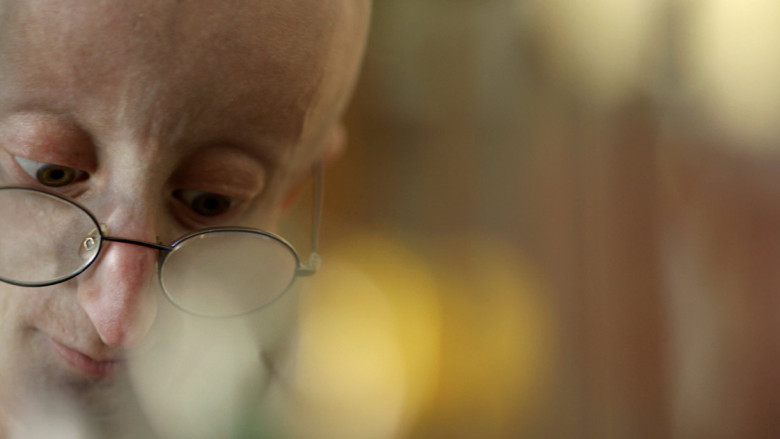
Sam Berns was a 17 year old young man with progeria (a disease where the body rapidly ages) who lived right outside of Boston, not far from where I lived for twelve years. Although he only lived to be 17, he packed more wisdom into his life than most adults.
Sam hard at work
I distinctly remember sitting at home one snowy February day in 2014, miserable. Looking for inspiration, I decided to watch his documentary. I was vaguely familiar with his story from an obituary that ran a few weeks prior (he passed away in January 2014).
His story was exactly what I needed to hear at that moment. Sam knew all along that his odds for a long life were slim, but he remained adamant about packing every activity into his life that was humanly possible, including drumming in his high school marching band. The drum and harness weighed almost as much as he did! But he found a way. He always found a way.
The best part of the documentary is that Sam, in talking to the camera, faced his mortality head on. He explicitly stated that he didn’t want the viewer to feel pity for him. The viewer wasn’t watching a pity party, they were merely meeting an average teenager, in an extraordinary situation, trying to live an average life. Nothing more, nothing less. Of course, whether he wanted to admit it or not, he was brave and wise beyond his years.
Sam’s story is one of many that have inspired me during the ups and downs of my life as I’ve gradually come to grips with my disease. I know he can help you as well, and I highly recommend watching his documentary. If you don’t have time to watch it, at least take a look at his TED talk on how to live a happy life. It is around 13 minutes, but it is well worth the diversion:
My faith has sustained me during the dark times, but there is no question that everyday people have also played an integral role in keeping me afloat. They always seem to enter my life at just the right time.
Every day brings a new challenge, but also, new role models. I am eternally grateful to these heroes of mine, some of whom I will never have the chance to meet, yet feel like I’ve known my whole life.
(Author’s Note: I was originally going to write this post before the new year, but got a little distracted by this bald eagle webcam and college football…it happens.)
I always used to make New Year’s resolutions, but this year, I’m just not feeling it.
It is quite an interesting phenomenon if you think about it. Every January 1st, millions of people around the world pick something in their lives that they vow to improve. We see this one day on the calendar as a clean slate, a source of hope and renewal, just because it is day one.
Every once in a while you hear a success story. For example, I know of someone whose New Year’s resolution was to lose weight, and lo and behold, they lost 50 pounds. For the rest of us, however, more often than not, resolutions end in failure.
I know that has been the case for me. That’s not to say making a resolution is pointless. There is no shame in sticking your neck out there and attempting to improve some facet of your life. In fact, it should be celebrated! I’ve merely come to the conclusion that I’d rather not set myself up for the inevitable failure and disappointment.
This year, instead of making a New Year’s resolution, I decided to take a look back at 2016, reviewing lessons learned while celebrating my many accomplishments that might otherwise fade into obscurity without proper reflection.
2016 was a unique year for me, full of highs and lows I’ve never experienced before. Above all, it was a year of transition. As someone who likes planning and structure, I found myself begrudgingly surrendering to forces outside of my control.
We’ll start with the lows, to get them out of the way. After graduating from business school this past May, I still haven’t found a full-time job. I have been blessed with two great part-time opportunities that have kept me afloat these past few months, but the ultimate goal has proven elusive. It weighs on me every day. Financial insecurity, especially with a disability and with student loans breathing down my neck, keeps me up at night. Thankfully, I planned for this possibility, and I take full responsibility for the situation I am in, so I will rise above it.
Besides, everyone despises job hunting. Repeated, unrelenting rejection is just plain miserable. Through my circumstances, I have come to know rejection quite well, and have learned to harness it into bigger and better opportunities. But even I have my limits. Constantly being rejected for a job, or worse – not even getting back a response – is incredibly frustrating. I just have to keep grinding. I know that the perfect opportunity awaits me out there, and I’m telling you, when I finally do get hired, I will give everything I have to the company lucky enough to hire me.
But I must also confess, I have been picky with my job search. The truth is, I just don’t have the energy anymore to choose “any job”. It has to be the right fit, an opportunity where I can harness my creativity and communication skills, for a company whose mission I believe in wholeheartedly. The role also has to pay well enough to support the additional expenses that my disease will inevitably incur – such as an accessible apartment, personal care attendants, adaptive equipment, etc.
For the time being, I’ve moved home with my parents in West Hartford. I love my parents, and love being able to see them regularly, but we are all in agreement that I am destined to be on my own. I’ve been in the Boston area the last 12 years and love the city to death. It is where I belong. Despite the move, I am fortunate that I have a home to come back to, and the support that I need to stay afloat during this challenging time.
The greatest challenge in 2016? My weakening body. I lost a tremendous amount of strength last year. I finished school just in time, before my disease really started to affect my quality of life. I don’t think I would survive school in my current condition, at least, not without taking some time off to obtain additional resources. It certainly wouldn’t be impossible, but it would be significantly tougher.
For example, at the beginning of 2016, I could get out of a chair without assistance from another person. Now, it’s impossible. Unless I am sitting on a high chair, I need someone to bear hug me to get me into a standing position. At the beginning of the year I was able to go up small steps and inclines with relative ease. Now, it’s a treacherous affair, given how much upper body strength I’ve lost. Declines are just as difficult. Without upper body strength, my crutches become useless if my shoulder gives out.
I’ve also fallen several times this year, and on two occasions, injured my foot. One fall required x-rays; fortunately they came back negative. The pain lingered for weeks, however.
Look, I know what my future holds. As soon as I lock down a job, figure out where I am going to live, and get a few other things squared away, I am going to buy a wheelchair, assuming of course that an injury doesn’t force my hand.
It is time.
I am past the point where I am afraid of what others will think of me in a chair. In fact, I welcome the freedom a chair will provide me. Sure, there is a laundry list of considerations and questions that remain related to how I will adjust to living in a wheelchair, but, as a whole, I know that it will improve my quality of life. I don’t know what it’s like to walk a few blocks care-free anymore. If I can get that freedom back while rolling down the street, so be it.
So yeah, there are a few things on my mind. But you know what? 2016 was also one heck of a year. To recap:
I graduated from Boston College’s MBA program in May. At graduation, not only did the pastor read a quote from one of my blog posts, I also received a standing ovation when I received my diploma, which was completely unexpected (and also flattering). I nearly fainted!
My time at BC allowed me to make many, many close friends with classmates and faculty, friendships which I will cherish the rest of my life.
I went to Texas. I have never been to Texas.
I met my nephew Connor for the first time in August. Although born in October 2015, I was not able to see him until the summer. He is a bundle of joy. I also got to spend a lot of quality time with my niece Sophia.
I finally committed to writing a memoir of my experience with Miyoshi Myopathy. Best of all, I have followed through on this commitment and am making substantial progress. I hope to have a first draft done in early 2017.
I had a piece published on the Boston Globe’s STAT website in February. I was one of the first patients to ever be featured in their “First Opinion” section.
I had the honor of speaking at several exciting events and locations, including:
The 2016 Rare Disease Day celebration at the Massachusetts State House (~400 people)
The Muscular Dystrophy Association’s “Fill the Boot” camp at Mohegan Sun Casino (~500 people)
“Speak Up” storytelling event at Real Art Ways, Hartford (~200 people)
The Jain Foundation’s patient conference in Dallas, Texas (~75 people) – here’s the video
Boston College “Bounce Back” resilience panel
Boston University Medical School genetic counseling class
Northeastern University Student Alumni Association club meeting
St. Thomas church youth group in West Hartford
Looking back on that list, I must say that I am not good at celebrating my accomplishments. I dismiss them too easily, mainly because I am never satisfied. Maybe that will be my resolution this year – celebrate when things go well! I dwell so much on the negative sometimes, that I forget to also savor my successes. I deserve to give myself a break from time to time.
2016 was, in totality, a very good year. Maddening and frustrating? Yes. But I made significant progress, providing a foundation for success in 2017. Whether I get a day job or live a life as a writer and traveling motivational speaker, I will not stop until I am at a place where I know that all of my struggles have been worth it.
All in all, 2017 is going to be an interesting year. I have no delusions that there will be more turbulence ahead. But I must remember, against all odds – after years of wallowing in self-pity and hating what my life was becoming – I made it this far.
No matter the uncertainty in my future, I must find a way. That is the only resolution that matters.
If you have been to this site before, you know that it looks a lot different now than it used to. Although I didn’t hate my previous blog template, I didn’t love it either. The capital letters in the title. The black band on top that really should have been an image but instead was blank space. The small font.
I spent a few minutes today browsing through the (free) templates WordPress has to offer. I settled on a theme that had a nice, clean feel to it. The picture unfortunately is a stock photo (all of mine were too pixellated when I tried to blow them up), but the New York skyline is an appropriate backdrop, as it was my home in the summer of 2015, and represents a happy milestone in my life with muscular dystrophy.
But I’m happy with how it looks. It is ready for prime time. Besides, although I am a perfectionist normally, I don’t want perfect to get in the way of good.
After writing a blog post about how I was going to write a book, I knew I would have to keep some level of accountability, otherwise it would be a public, unfulfilled promise.
It took me a few weeks to get the ball rolling, but I am happy to say that I am at the 50-page mark of my memoir. I am starting my story around when the symptoms began, in 2008. 50 pages in, and I am just about at 2012. The first draft will easily be over 100 pages, and that’s before I go back and add in more detail.
The process of writing has been fun, but it has not been easy to relive some of my darker moments. I am currently at the time period (2009-12) when I was not handling my symptoms very well. I have been digging up old emails and notes in order to jog my memory, bringing back events and situations that I’d rather forget. However, if not for these moments, it would not be a book worth reading! I need to share the bad in addition to the good. In order to understand where I am today, it is important to convey to readers where I’ve been on the road to acceptance.
It has been a surreal experience. I am amazed by how quickly my body deteriorated, and how unprepared I was to handle my circumstances when they happened. Now, I have the luxury of hindsight and perspective, but at the time, it was extremely difficult.
All I can say is, I have grown so much in nine years. I wish I could go back and let my younger self know I’d be ok.



 Sidewalks and Stairwells