10,000 Hours

This is a continuation of my post from earlier in the week, which you can find here.

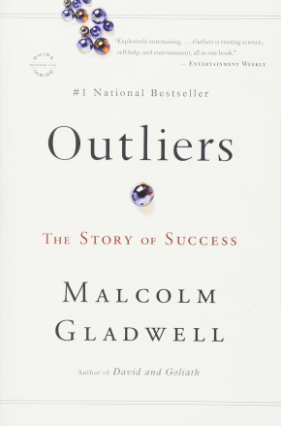
In Malcolm Gladwell’s famous book, Outliers, he talks about several factors that set high-achievers apart from the rest of the population. One of the main takeaways of the book is something called the “10,000 Hour Rule” – basically, anyone who has ever become an expert at anything has needed to immerse themselves in a task for at least 10,000 hours. This holds whether you’re the Beatles practicing to become the greatest band of all time, or Bill Gates learning to program a computer.

Screen Shot 2018-02-15 at 8.27.26 PM
An interesting read.

Although the premise has been the subject of intense debate, what is beyond argument is that the more you practice or experience something, the more of an expert you become. It’s rather straightforward.

Assuming the 10,000 hour rule is mostly true, I boldly assert that I am an expert at being a patient with muscular dystrophy. It’s an odd thing to say, but ever since it took over my life ten years ago, it’s always been on my mind. It has changed me physically, emotionally and spiritually. Many of my experiences cannot be adequately explained to the general population, no matter how much someone wants to understand.

Continue reading “10,000 Hours”

Crash and Burn

My life seems to be moving in fits and starts these days. Two steps forward, one step back.

If you have been following my journey for any length of time, you know this is nothing new for me. It comes with the territory of living with an adult-onset muscle disease. Pick your favorite metaphor – life with this disease is a roller coaster, a series of peaks and valleys, a twisting and turning road. Left, right, up, down – the path is never straight or level. The lack of continuity is often maddening, and always frustrating.

I’ve learned how to keep a level head through it all, but sometimes, life can be too much. Sometimes, no matter how hard I fight, I have to admit defeat. Not a lost war, but a lost battle.

Continue reading “Crash and Burn”

My Role Models

Note: This post is a supplement to an article I wrote for the Muscular Dystrophy Association’s Quest magazine in January 2018, which you can find here.

I have also written about the importance of role models in this post

I have had many role models over the years who have helped me come to grips with my muscle disease. Some I have come to know personally; others I hope to meet one day. And of course, there are those I will never get the chance to meet.

The goal of this page is to list all the people who have helped me in some way. Each person, at some point in my life, helped pick me up when I was feeling down, and I am forever grateful.

Eventually, time-willing, I will write a blog post about each person to give them their due credit. As of right now, I will list them out, and provide a link to their story or website, so that you can learn more about them. If you are having a tough time, I highly encourage you to Google them or click on some of the links below. Contrary to how it seems sometimes, there are many extraordinary people out there in the world that we can learn from and emulate. Continue reading “My Role Models”

Metamorphosis

Last Friday, I found myself scribbling down notes while listening in on a work call. Every few seconds, I would jot down an action item for follow-up, with an occasional inane doodle in between. I know what you’re thinking – it’s 2017, why am I still writing down my notes? You’ll be happy to know that I use my computer (Evernote) most of the time, it just so happens that, when I want to brainstorm ideas, write down a quick list of to do’s, or take notes passively while listening in on a conversation, nothing beats pen and paper.

Which is why this latest discovery was all the more unsettling.

Continue reading “Metamorphosis”

The Unexpected Joys

A couple weeks ago, I had the opportunity to have my patient story recorded by Annie Brewster at Health Story Collaborative. The end product will be a 10-15 minute audio clip chronicling my journey over the last nine years, from my first symptoms to present day. It was a fantastic experience, and I’m glad I reached out to Annie on a whim after watching her TED talk.

Towards the end of our call, I asked about CommonHeath, a healthcare blog run by WBUR, Boston’s NPR station. While researching Annie’s background before our call, I noticed that she had written several pieces on the site, and was involved with curating patient stories. I asked her if my story would be a good candidate for CommonHealth, and she said it would be.

Encouraged, I reached out to Carey Goldberg, the editor of CommonHealth. One thing led to another, and, with the help of Carey and another editor, Ginger Marshall, we decided I would write about my thought process in accepting that I needed to get a wheelchair.

It’s a difficult subject to write about. First off, it’s a heavy topic, fraught with emotion. Second, it is difficult to convey, in 1,200 words, what it feels like to come to this acceptance. I could write 10,000 words on the topic and it would be incomplete.

Difficulties aside, I am proud of how the piece came out. The title isn’t my favorite, but I understand why it is so straightforward and blunt. It clearly states what the article is about, in no uncertain terms. As an opinion piece, you are either interested in reading more, or you’re not.

Screen Shot 2017-04-24 at 9.08.24 PM
My article on the CommonHealth website.

It was a thrill to see my article on the CommonHealth website and the WBUR Facebook page, sites that thousands of people frequent on a daily basis. More importantly, I was heartened by the positive reaction of other patients, and how those going through a similar situation could relate to what I wrote. The truth is, I was initially reluctant to write the article, mainly because it is a touchy and emotionally-charged subject. I know how I feel about the experience, but it is difficult to put into words. What if someone takes something I wrote the wrong way, or reads into it something I didn’t intend? Despite my initial hesitation, I decided it was a risk worth taking.

The article had a good run on social media, but, like everything else on the internet, I figured it would fade away into obscurity.

Or so I thought.

Yesterday, around midday, I was checking the WordPress app on my iPhone, casually glancing at Sidewalks and Stairwells’ page views for the day. On a good day, I usually get 20-25 views on my website. I checked the app: 200 views. I wish you could have seen my face!

Initially, I thought my site was being flooded by bot traffic. Then I saw a comment on my front page mentioning they found my site via NPR, and it hit me – my post got picked up by NPR’s social media accounts.

I checked, and there it was at the top of the NPR Facebook page, which has nearly 6 million followers. This article that I wrote, partly for my own healing, was now being read by millions of people.

The comments started flooding in. I was hopeful my article would have a positive impact on people, but part of me was nervous that there might be some negative, troll-ish comments that would make me regret being so vulnerable (I know, I know, I should never read the comments section). Fortunately, there were only a couple bad ones, and they were so comically off-base that I found them more amusing than anything. You truly can never please everyone.

By the end of the day, I had over 1,100 views. Yesterday, I had 450 more. 1,500+ in 2 days. Not bad!

I have been hoping and praying for a day where my blog, my little slice of the internet, gets seen by a wide audience. I don’t want this because I want to become famous (I am an introvert after all), rather, my hope is that the more people who read this site, the more people I might be able to help. I share my story, warts and all, because I want it to resonate with others.

I am grateful for the outpouring of support by complete strangers around the world. Overwhelmingly, the response to my article was positive. Patients shared their own struggles, and readers who were not disabled valued the perspective I brought to the table. If I can use my journey, which was once an intolerable nightmare, to inspire and inform, that is a good thing.

I hope yesterday is just the beginning, the big break I have been waiting for. I am only one person, but I know the impact one person, with the right message, at the right time, can have on someone’s life. I am here to pay it forward.


Book Progress: 115 Pages

I am finished with the first draft of my memoir!

It checks out at 115 pages, single-spaced, give or take a few placeholders and incoherent ramblings.Screen Shot 2017-03-14 at 11.29.07 PM.png

This is a big deal for me. I’ve attempted to write my story many times, always failing. This time, though, is different. I am motivated, and it just feels like the right time. My transition into a wheelchair is nearly complete. It is a natural bookend to my journey.

The key to writing a book, I’ve found through trial and error, is to take a seemingly insurmountable project and break it down into manageable pieces. My immediate goal was to write out, chronologically, all the important events that have taken place in my life between 2008 and the present day. I have accomplished that. The next step is to go through what I’ve written again, and start to turn it into a story. Then in subsequent steps, I’ll add more detail, quotations, and finally, give it one final run-through.

This next step, I believe, will be the most difficult. Continue reading “Book Progress: 115 Pages”

Interview on WebMD

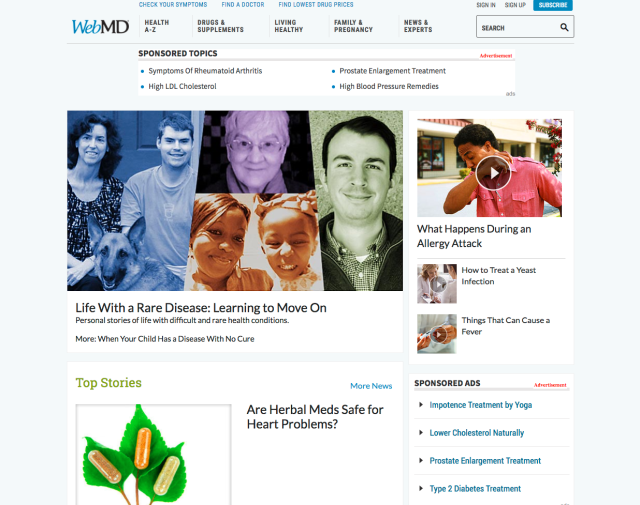
Today I am featured on the WebMD website for Rare Disease Day! It is very exciting. I was interviewed a few weeks back (many thanks to NORD for connecting me) for a series they are running about patients living with a rare disease.

The interview gave a brief overview of my condition, my patient journey, and advice I’d give to others who are newly diagnosed with an adult-onset disease. I always enjoy being able to use my story to raise awareness and offer advice to new audiences.

You can find a link to the interview here.

Screen Shot 2017-02-28 at 10.19.59 AM.png
At least I am the face people will see as they type in their symptoms mid-panic.

Lesson Learned #2: The Importance of Role Models

Author’s Note: This is my second post in The Adversity Playbook, a series that outlines my lessons learned in dealing with adversity.

In my first lesson, I mentioned the importance of opening yourself up to others when you are feeling down or struggling with a heavy burden. I know I make it sound like it’s an easy decision, but I know firsthand how difficult it can be! I fully admit that it took me many years to open up. Looking back, I regret how long I internalized my challenges, yet I can appreciate the difficulty inherent in making the choice.

It is only once you have opened yourself up to someone that you can fully appreciate how important other people can be. Adversity is not meant to be fought in isolation. Friends and family members are a tremendous source of comfort, and confiding in them can often lift the burden right off your shoulders. What you will find is that people are thankful that you have opened up to them, and, if they are truly someone you can trust, they are more than willing to help.

But there is another group of people who can be just as helpful to you as a family member or a friend. They may not know you, but you certainly know them. They are adversity “role models” – everyday heroes whose stories you come across and that stay with you long after. Often these people leave indelible imprints on your soul, and they become your personal guides as you navigate the rough terrain of life.

screen-shot-2017-01-23-at-1-34-04-pm

In the internet age, it is so easy to find stories of other people who have lived with, or are living with, what you are going through. I can Google “muscular dystrophy” and find numerous blogs and articles about people living with muscle weakness, who understand on an intimate level what I’ve felt over the years. They know what it’s like to have dreams crushed, to experience loneliness and isolation, and to adapt to a new way of life. Yet, many of these people have learned how to forge new dreams, and live more meaningful lives than they would have otherwise. In your own situation – whether you are living with a disease, or have experienced depression, failure, or some other form of adversity – the internet can lead you to stories of others who have walked a mile in your shoes.

Forums and websites are great for connecting with similar individuals, and are useful in their own right. But what I have found especially valuable is finding specific role models – someone whose story resonates on a deep level. It can be a person specific to your situation, or it can be someone walking in a completely different pair of shoes, overcoming their own form of adversity.

You will often find that there are two different types of stories you come across. First, you have the stories that are super upbeat and talk about how inspirational the person is for overcoming their challenge that otherwise should have kept them from being a contributing member of society. You can spot these stories a mile away – I’m sure you know what I’m talking about. They come off as condescending and patronizing, and often make you feel like the person has been exploited. This happens a lot in the disability space. Oftentimes the writer or editor – usually someone unfamiliar with the person’s story going in – does not intentionally try and tell the story in that fashion. But it happens a lot, and quite honestly, stories told in this fashion aren’t all that useful to someone seeking a role model.

The second type of story – authentic storytelling – is the kind that will be most beneficial to you. I’m talking about stories that tell the good and the bad, and hold nothing back. These are usually either long-form feature pieces (in written or video form) that chronicle the subject’s journey, or are written/recorded from a first-person perspective. Personally, I want to know how the person has struggled, because when they ultimately triumph, or come to a level of peace with their situation, it feels authentic, rather than artificial. You fully contextualize their journey, and understand the steps that got them to that point.

Authenticity is crucial. You don’t want to read something and feel manipulated, or feel like the story is being used in a way to achieve some commercial gain or serve an ulterior motive. Authenticity is the driving force of this website – if I am going to put my story out there to the world, I want people to understand how it really is. I may overcome challenges, but there are days where life gets the best of me. The day I am not portraying my disease in an honest light is the day I should stop writing on here altogether.

(Quick tangent: I was part of a campaign once where my story was going to be used as part of a campaign to get people to donate money, and I immediately recoiled when I saw how my story was written by the author. In short, I was being portrayed as a helpless person suffering from a terrible disease, in need of the donor’s pity. Thankfully, I saw the first draft and refused to participate, and it never went to print. Another lesson learned!)

Our role models allow us to see that we are not alone in anything we face. It is necessary for us to find others who have made it through the dark times, and it is important to learn how they did it. Adversity happens to everyone, although we handle it in different ways. In the disease realm, where I live and operate, I often seek inspiration from people with all sorts of diseases outside of muscular dystrophy, simply because there is so much to learn from their circumstances that I can then use in my own life.

When you come across a story that resonates with you, I encourage you to read it or watch it more than once, in order to let the lessons sink in and internalize certain situations the person experienced. Save the story onto your computer or phone for when you need inspiration. Take notes if you have to. I firmly believe every story has a unique learning. I’ve internalized countless tips, quotes and mantras based on what others have been through. It is knowledge you can’t learn in a classroom or a how-to book.

Personally, I have several role models who have taught me a great deal about life and allowed me to see a future beyond my disease. Some are strangers, others are close friends and family.

Now, for the homework. (You didn’t think I would assign homework, did you?) There are many inspiring stories I will share in the coming months, but for right now, I encourage you to check out a documentary called Life According to Sam, which originally aired on HBO and can be viewed on iTunes and Netflix.

Sam Berns was a 17 year old young man with progeria (a disease where the body rapidly ages) who lived right outside of Boston, not far from where I lived for twelve years. Although he only lived to be 17, he packed more wisdom into his life than most adults.

13212-1
Sam hard at work

I distinctly remember sitting at home one snowy February day in 2014, miserable. Looking for inspiration, I decided to watch his documentary. I was vaguely familiar with his story from an obituary that ran a few weeks prior (he passed away in January 2014).

His story was exactly what I needed to hear at that moment. Sam knew all along that his odds for a long life were slim, but he remained adamant about packing every activity into his life that was humanly possible, including drumming in his high school marching band. The drum and harness weighed almost as much as he did! But he found a way. He always found a way.

The best part of the documentary is that Sam, in talking to the camera, faced his mortality head on. He explicitly stated that he didn’t want the viewer to feel pity for him. The viewer wasn’t watching a pity party, they were merely meeting an average teenager, in an extraordinary situation, trying to live an average life. Nothing more, nothing less. Of course, whether he wanted to admit it or not, he was brave and wise beyond his years.

Sam’s story is one of many that have inspired me during the ups and downs of my life as I’ve gradually come to grips with my disease. I know he can help you as well, and I highly recommend watching his documentary. If you don’t have time to watch it, at least take a look at his TED talk on how to live a happy life. It is around 13 minutes, but it is well worth the diversion:

My faith has sustained me during the dark times, but there is no question that everyday people have also played an integral role in keeping me afloat. They always seem to enter my life at just the right time.

Every day brings a new challenge, but also, new role models. I am eternally grateful to these heroes of mine, some of whom I will never have the chance to meet, yet feel like I’ve known my whole life.

Reflections and Resolutions

(Author’s Note: I was originally going to write this post before the new year, but got a little distracted by this bald eagle webcam and college football…it happens.)

I always used to make New Year’s resolutions, but this year, I’m just not feeling it.

It is quite an interesting phenomenon if you think about it. Every January 1st, millions of people around the world pick something in their lives that they vow to improve. We see this one day on the calendar as a clean slate, a source of hope and renewal, just because it is day one.

Every once in a while you hear a success story. For example, I know of someone whose New Year’s resolution was to lose weight, and lo and behold, they lost 50 pounds. For the rest of us, however, more often than not, resolutions end in failure.

I know that has been the case for me. That’s not to say making a resolution is pointless. There is no shame in sticking your neck out there and attempting to improve some facet of your life. In fact, it should be celebrated! I’ve merely come to the conclusion that I’d rather not set myself up for the inevitable failure and disappointment.

This year, instead of making a New Year’s resolution, I decided to take a look back at 2016, reviewing lessons learned while celebrating my many accomplishments that might otherwise fade into obscurity without proper reflection.

2016 was a unique year for me, full of highs and lows I’ve never experienced before. Above all, it was a year of transition. As someone who likes planning and structure, I found myself begrudgingly surrendering to forces outside of my control.

We’ll start with the lows, to get them out of the way. After graduating from business school this past May, I still haven’t found a full-time job. I have been blessed with two great part-time opportunities that have kept me afloat these past few months, but the ultimate goal has proven elusive. It weighs on me every day. Financial insecurity, especially with a disability and with student loans breathing down my neck, keeps me up at night. Thankfully, I planned for this possibility, and I take full responsibility for the situation I am in, so I will rise above it.

Besides, everyone despises job hunting. Repeated, unrelenting rejection is just plain miserable. Through my circumstances, I have come to know rejection quite well, and have learned to harness it into bigger and better opportunities. But even I have my limits. Constantly being rejected for a job, or worse – not even getting back a response – is incredibly frustrating. I just have to keep grinding. I know that the perfect opportunity awaits me out there, and I’m telling you, when I finally do get hired, I will give everything I have to the company lucky enough to hire me.

But I must also confess, I have been picky with my job search. The truth is, I just don’t have the energy anymore to choose “any job”. It has to be the right fit, an opportunity where I can harness my creativity and communication skills, for a company whose mission I believe in wholeheartedly. The role also has to pay well enough to support the additional expenses that my disease will inevitably incur – such as an accessible apartment, personal care attendants, adaptive equipment, etc.

For the time being, I’ve moved home with my parents in West Hartford. I love my parents, and love being able to see them regularly, but we are all in agreement that I am destined to be on my own. I’ve been in the Boston area the last 12 years and love the city to death. It is where I belong. Despite the move, I am fortunate that I have a home to come back to, and the support that I need to stay afloat during this challenging time.

The greatest challenge in 2016? My weakening body. I lost a tremendous amount of strength last year. I finished school just in time, before my disease really started to affect my quality of life. I don’t think I would survive school in my current condition, at least, not without taking some time off to obtain additional resources. It certainly wouldn’t be impossible, but it would be significantly tougher.

For example, at the beginning of 2016, I could get out of a chair without assistance from another person. Now, it’s impossible. Unless I am sitting on a high chair, I need someone to bear hug me to get me into a standing position. At the beginning of the year I was able to go up small steps and inclines with relative ease. Now, it’s a treacherous affair, given how much upper body strength I’ve lost. Declines are just as difficult. Without upper body strength, my crutches become useless if my shoulder gives out.

I’ve also fallen several times this year, and on two occasions, injured my foot. One fall required x-rays; fortunately they came back negative. The pain lingered for weeks, however.

Look, I know what my future holds. As soon as I lock down a job, figure out where I am going to live, and get a few other things squared away, I am going to buy a wheelchair, assuming of course that an injury doesn’t force my hand.

It is time.

I am past the point where I am afraid of what others will think of me in a chair. In fact, I welcome the freedom a chair will provide me. Sure, there is a laundry list of considerations and questions that remain related to how I will adjust to living in a wheelchair, but, as a whole, I know that it will improve my quality of life. I don’t know what it’s like to walk a few blocks care-free anymore. If I can get that freedom back while rolling down the street, so be it.

So yeah, there are a few things on my mind. But you know what? 2016 was also one heck of a year. To recap:

  1. I graduated from Boston College’s MBA program in May. At graduation, not only did the pastor read a quote from one of my blog posts, I also received a standing ovation when I received my diploma, which was completely unexpected (and also flattering). I nearly fainted!
  2. My time at BC allowed me to make many, many close friends with classmates and faculty, friendships which I will cherish the rest of my life.
  3. I went to Texas. I have never been to Texas.
  4. I met my nephew Connor for the first time in August. Although born in October 2015, I was not able to see him until the summer. He is a bundle of joy. I also got to spend a lot of quality time with my niece Sophia.
  5. I finally committed to writing a memoir of my experience with Miyoshi Myopathy. Best of all, I have followed through on this commitment and am making substantial progress. I hope to have a first draft done in early 2017.
  6. I had a piece published on the Boston Globe’s STAT website in February. I was one of the first patients to ever be featured in their “First Opinion” section.
  7. I had the honor of speaking at several exciting events and locations, including:
  • The 2016 Rare Disease Day celebration at the Massachusetts State House (~400 people)
  • The Muscular Dystrophy Association’s “Fill the Boot” camp at Mohegan Sun Casino (~500 people)
  • “Speak Up” storytelling event at Real Art Ways, Hartford (~200 people)
  • The Jain Foundation’s patient conference in Dallas, Texas (~75 people) – here’s the video
  • Boston College “Bounce Back” resilience panel
  • Boston University Medical School genetic counseling class
  • Northeastern University Student Alumni Association club meeting
  • St. Thomas church youth group in West Hartford

Looking back on that list, I must say that I am not good at celebrating my accomplishments. I dismiss them too easily, mainly because I am never satisfied. Maybe that will be my resolution this year – celebrate when things go well! I dwell so much on the negative sometimes, that I forget to also savor my successes. I deserve to give myself a break from time to time.

2016 was, in totality, a very good year. Maddening and frustrating? Yes. But I made significant progress, providing a foundation for success in 2017. Whether I get a day job or live a life as a writer and traveling motivational speaker, I will not stop until I am at a place where I know that all of my struggles have been worth it.

All in all, 2017 is going to be an interesting year. I have no delusions that there will be more turbulence ahead. But I must remember, against all odds – after years of wallowing in self-pity and hating what my life was becoming – I made it this far.

No matter the uncertainty in my future, I must find a way. That is the only resolution that matters.

The Better Angels of Our Nature

Three weeks ago, at the dentist’s office, as the final bitewing x-ray was carefully being removed from my mouth, the dental assistant decided it was the perfect moment to ask a simple, light-hearted question to help pass the time:

“So, what do you think of the election?”

I recoiled and nearly swallowed the plastic x-ray. I let out a grunt of disapproval, which could roughly be translated as, “Don’t you know it’s 8:30 in the morning on a Monday, I’m caffeine-deprived, and you just forced me to suffer through 15 minutes of bitewings being placed at awkward, uncomfortable angles throughout my mouth?”

Whatever happened to “How was your weekend?” or “Your teeth look horrible – do you floss every day?” All perfectly valid, reasonable questions for useless small talk.

“So, what do you think of this election?” 

In case she didn’t get the memo, I supplemented the guttural noise with a piercing stare. I took a sip of water for dramatic effect.

She took the hint.

“Ahh, yeah, an aggressive question to ask at 8:30, huh?” she replied with a canned laugh.

Eventually, since I didn’t want to come off as a total jerk, I started mumbling half an answer about how it was a complex question. I almost blurted out an exasperated “Do you have all day?”, then thought better of it in case she closed the door behind me and said, “I do! I’m here ’til 6.” Thankfully, before my rambling had a chance to turn into coherent thought, the dentist arrived in the nick of time to begin the exam.

Don’t get me wrong, I am all for civic discourse, and I appreciate the assistant’s candor in cutting through the conversational fluff meant to put the patient at ease. But the last thing I needed at that moment was to be tilted back in the chair, blood rushing to my head, with the voices of the candidates echoing in my mind as I teetered on the brink of unconsciousness.

In case you can’t tell, yes, I am through with this election. I’m sure you are as well. Although I am typing this the day before Election Day, many of you will read this after. Either way, it has been a year to forget, and no matter who wins, millions of people will have a bitter taste in their mouth.

Thankfully, this is not a political post, so do not fear. I am writing this in the spirit of bipartisanship, as no matter who you are or where you live, we are all in need of a hug.

My time at the dentist’s office highlights two important points. First off, if you want to ask someone a political question, make sure they are in no danger of choking to death. They may find it a preferable outcome. Second – and the actual reason I am writing this post – is that you can’t really talk about politics in a 15-30 second window, unless of course you are looking for “It’s a train wreck!” as your preferred answer, so that the remaining time can be spent in forced, resigned laughter. Considering the awfulness of being at the dentist, perhaps that was the response the assistant was hoping for.

I offer this light-hearted moment as proof that even with the most depressing of topics, there can be humor. But overall, I have to be honest: this election has left me hurting. We are all hurting.

But all is not lost. Will you go with me for a walk?


To watch the discourse taking place on TV, to read the Facebook posts and subsequent comments about anything and everything related to politics, it sure seems like we are seeking out the worst in others. We gravitate towards disagreements without first finding common ground, or even conceiving that there could be common ground. People have resorted to shouting over one another, as if the volume of one’s voice has any bearing on persuasion. I am dismayed by the lack of civility. This past year, especially, has been like watching a fabric tear get worse.

There is no question there is division in this country. We are a nation of conflicting ideals. This narrative is reinforced anytime we watch the news, read articles or encounter someone who brings up certain controversial topics. The term “echo chamber” has become a part of our national lexicon, and news stories with varying degrees of truth are shared until they seemingly become truth.

In this age of social media, everything gets misconstrued and misinterpreted. Offhand comments turn into partisan mud slingling. Even your innocent Instagram post about your new puppy somehow turns into a referendum on the direction of this country. We’ve all felt the anger boil up inside us when we see or hear something we disagree strongly with. No one is immune to it. Welcome to 2016.

We see everyone that we encounter in our day-to-day lives through the lens of us vs. them. And for anyone labeled as them, they cannot be trusted. Our society is a windshield, damaged by the impact of a projectile, cracking in all directions, struggling to maintain its structural integrity.

I’ve had many sleepless nights thinking about this decline in civility. For heavy conversations like politics, it’s pretty clear that the conversation is doomed from the outset unless you really understand and know the person you are talking to. When you are arguing with someone named Pat in the comments section of an article you just read, the chances of respectful dialogue are next to zero. If you read an article that openly mocks and denigrates your views and beliefs, finding common ground is impossible.

After all, aren’t your conversations with your best friends about heavy issues or the meaning of life far different than when you engage with some random person you don’t know on social media? Of course they are. There is a level of trust with the people you know, because they understand you, and you understand them. You know where they are coming from, and if you disagree with something, you know why. Even if you engage in passionate debate that borders on argument, you always have the foundation of love and respect for that person to fall back on.

Once you have seen the best in someone, you form a trust with them that can withstand any disagreement. The problem is, our first interaction with a stranger and their differing viewpoints often brings out the worst in ourselves and in them. I am just as guilty of this as anyone else. I am not perfect, nor do I pretend to be observing all this from my high horse. I have gotten into arguments, and sometimes find myself ready to burst at the seams.

At the same time, I have seen what seeking out the best in others has done to change my life. Through my experience as a rare disease patient, I have had the wonderful opportunity to befriend people from all walks of life, from every corner of the country, every ethnicity, socioeconomic class, and political leaning.

Disease is the great equalizer of life. When you can understand someone’s disease-related fears, their hopes and dreams (some of which have been destroyed by their illness), you are able to form a more complete picture of who they are. By listening to what flows from their heart, it changes a person. It certainly has changed me. I cherish these conversations, these connections that form when two people share their vulnerabilities, and really listen to what the other has to say. If there’s one benefit to having a life-altering disease, it is that it has forced me to be a more empathetic individual.

I have become wired to find the best in others, not because I have some noble trait that others lack, but because it is the very key to what has allowed me to survive a life-altering condition. Without others, I am nothing.

This understanding did not come easily.


Six years ago, them meant everyone in my life. I was 24, living in Boston, wholly unable to come to grips with my muscle disease, dysferlinopathy, that started manifesting two years prior. In the blink of an eye I had lost the ability to run. I struggled to go up a flight of stairs. I would wake up in excruciating back pain, my muscles atrophying and contorting with reckless abandon.

Worse, I began to fall in public, my knees buckling and giving out without any notice.

I was at a crossroads in my life – ability and disability fighting for control of my future. I knew disability would ultimately win, and it has, but at the time I was a battleground of depression and, above all, fear.

I vainly did everything I could to hide my symptoms from my friends and coworkers. I could still walk somewhat normal, although I wore long pants every day because I wanted to hide the fact that I had begun wearing leg braces. I felt like Forrest Gump, only the rock pelting my face was from life, not a bully on a bicycle.

I fought my fate, viciously, for as long as I could. In doing so, I alienated myself at work, lashed out at my friends, and began talking in code to my parents, unwilling to express how I was truly feeling. Above all, I was so jealous of those around me – able-bodied, living life without a care in the world. As a defense mechanism I sought out every flaw I could find in others, in an attempt to tear them down to my level, as I was incapable of building myself up proactively.

After a traumatic fall, my decision became clear. I knew I would have to tell everyone in my life what was going on with my body. I wasn’t stupid. I could hear the whispers in the hallway when I fell in the office, and I knew my roommates could see me laboring against the railing going up to our apartment, exhausted from carrying bags of laundry. I hated being an oddity but hated even more keeping this battle to myself any longer. I had isolated myself from those around me for too long, a disabled traveler in a foreign, able-bodied city that I no longer loved.

I shared my diagnosis in a blog post, as writing was my outlet of choice when times got tough. One post became several, first for the Muscular Dystrophy Association, then on this website, where I opened up about my journey and what it was like to walk a mile in my bulky leg braces. I confirmed what everyone had suspected, but had been too afraid to ask. I indeed had a disease that was making we weaker.

My initial reason for writing was to help myself – I wanted to lift this perverse burden off my shoulders. I figured people would finally know my condition, and that would be that. No more whispers or perplexed stares.

What I did not expect, however, was the impact sharing my story would have on others. As I didn’t think my story was that inspirational, I never considered the possibility. Coworkers who read my blog began telling me in private about childhood surgeries that had left them insecure, or neurological conditions they were reluctant to tell others about. Soon I became a sounding board for friends confessing anxieties, such as career stagnation and relationship trouble.

It wasn’t just people I knew reaching out to me. Strangers who came across my MDA blog, and even this blog, would email me out of the blue, explaining their situation, some of whom were struggling to accept their own muscle disease; others, down on life in general.

At first, I was puzzled. Again, I didn’t think my story was more inspirational than anyone else going through adversity. I had read plenty of stories of others who had dealt with far worse. Eventually, I would realize what was making an impact was my willingness to be vulnerable. I laid it all out there, the good and the bad, and as a result people felt comfortable sharing their long-suppressed emotions, because they knew I could understand the complexity of what they were going through. My disease had put me through the ringer. By laying bare my fears and my frustrations, I had implicitly given them permission to do the same. They connected with me in a way that they were unable to with others.

The angry, petty, version of myself melted away the more I encountered the vulnerabilities of others. I began to see everyone I talked to in a new light, especially my family and friends who I had unwittingly taken on my emotional roller coaster the last few years.

Those perfect lives everyone else was living? They were not perfect. In fact, for many friends it was all just a façade. Inside, they were hurting.

Once I became a steward – an unintended observer if you will – of the fears and insecurities of others, there was no going back. In the last two years I have attended business school and have started sharing my story with audiences throughout New England. I have had several new people enter my life, from acquaintances to best friends. No matter who I meet, I try to look for what grounds them, what makes them human, rather than feeding my prejudices. It’s hard to get past prejudice, but I try my best. When I meet someone, I want to not only shake their hand, but also connect with them. To truly feel understood by someone is a feeling I cannot describe.


I am more than my disability, and you are more than whatever boxes you check on a form. I’ve found that to truly understand a person, you have to dig deep, understand their hopes and dreams, their fears and insecurities. Are they struggling? Are they in pain? Are they worried about a health challenge or job security or a relationship? Are they passionate about something yet feeling hopeless about their current situation? The answer to one of those questions, almost always, is yes.

We are conditioned to make judgments about someone based on Facebook posts and offhand tweets. We increasingly identify someone’s character, their very integrity, by their political affiliation, what they look like, where they live. Our opinions about someone are being made based on snap-judgments, on incomplete information, because that’s all we have time for. I’ve done it, and it’s hard to break free from this cycle once it becomes ingrained.

But a consequence of our ability to connect with others online has been our disconnect in person. We think that who someone is online is their true self, their full self. Social media has a way of distorting reality. I’ve seen Facebook posts pit retirees against high schoolers. friend against friend, cousin against cousin. It’s horrifying and sad.

It’s as if our lives have become this warped experiment where I show you a picture of someone and some basic demographic information and you are forced to come to snap judgments about their life, their temperament and their character. Chances are our prejudices will not align with reality. Is Pat from the comments section an internet troll or a heartbroken soul just having a bad day?

What we’re missing is the trust component, and we can’t have trust unless we first connect on a deep level with someone. Increasingly, our connections are happening online, far removed from our true personas. Online connections, by their very nature, are overwhelmingly superficial.

It is going to take effort to build this trust back, and find the good in others. But it is possible to break free from our collective incivility. The pillars of our society were built on decency, and we can regain it. Partisanship and distrust do not have to be the norm if we refuse to let it be the norm.

So how do we rebuild civility and trust? We are not going to magically unify in a day, or even a year. But you can start with people you already know, the people you communicate with on a daily basis, or even complete strangers. For every friend who is struggling that you lend a shoulder to, for every impulse you resist to engage in an argument, for every stranger you help up who falls for seemingly no apparent reason, you change this divisive narrative. It adds up. It matters. Even if no one gives you the proper respect back, just the fact that you yourself have decided to contribute to the solution is a start.


The moment I regained my civility happened on a cold January night a few years back. I was walking in the middle of Mass. Ave in Cambridge, back to my apartment. I was paying attention to my steps, but did not notice the uneven surface of the road, stumbled, and fell to the ground. I was embarrassed, frustrated, and above all, scared. This was past the point where I could pick myself up on my own, so I was in dire need of assistance.

Suddenly, two nameless strangers rushed to help me up, and before the light turned green and I was flattened by oncoming traffic, they were gone, disappearing into the night. I tried to find them to say thanks, to no avail.

I realized when I got home that I could no longer be mad at the world; I had seen the best of humanity. This was the traumatic fall that I referenced earlier. This was the final knockdown I needed by life to tell me to shape up.

Since that day, I have forced myself to find the best in others, to outwardly seek goodness rather than be a passive recipient to random acts of kindness. With a more positive mindset I was able to properly open up to the world through my writing, and soon after, my speaking. Doing so has enabled me to meet countless people who have enriched my life. I realized the world was out to get me only if I gave it the permission to do so.

I share this because if this transformation can happen to me, I know it can happen to you as well. What you will find is that everyone around you – friends, family members, especially complete strangers – are desperate for someone to connect with. Desperate to have genuine, heart-to-heart conversations. Everyone is struggling with something. Even the people who spout off on the internet about the latest political scandal is, at their core, someone hurting or full of fear.

If we can rebuild these connections in our own lives, and opt to seek out the best in strangers by first trying to understand them before casting judgment (it can be hard, I know), we can change the narrative. We can, relationship by relationship, rebuild our collective decency. Even if we read something that we strongly disagree with, just the act of taking a step back and going “I wonder who this person really is, and where they are coming from that led them to this point?” can be a start. We are not a society beyond repair, we are a society in need of repair. The divisions that exist are indeed real, but the distance between us is entirely in our control.

I close with a quote from Abraham Lincoln’s inaugural address in 1861. Faced with the crisis of secession and the impending Civil War, his words are as true today as they were then:

“We are not enemies, but friends. We must not be enemies. Though passion may have strained it must not break our bonds of affection. The mystic chords of memory, stretching from every battlefield and patriot grave to every living heart and hearthstone all over this broad land, will yet swell the chorus of the Union, when again touched, as surely they will be, by the better angels of our nature.”

It will take time to heal, but it is worth it for us and for the generations to come. The irony of writing about the state of social media in a blog post to be shared on social media is not lost on me. So, to prove my sincerity, if you yourself need someone to talk to, vent to, or confide in, please feel free to reach out to me. I am not a bot nor an internet troll. I am just someone who believes that within all of us lies the better angels of nature, longing for connection.

Unless of course, I am at the dentist, in which case, please wait in the lobby.