Lesson Learned #1: Don’t Go At It Alone

There are certain moments that still stand out, painful as they are to recollect.

In the early days of my disease, when my symptoms first started to manifest, I didn’t know how to respond to what was happening to my body. Initially, I shrugged it off. I figured my leg cramps and sore back were the result of being out of shape. When the symptoms persisted, and I noticed my muscles were becoming weaker, I started to worry. I pulled out my medical records from four years prior and read over my diagnosis – dysferlinopathy – searching for clues on what was happening to me. I read the neurologist’s notes on the expected progression of the disease, and suddenly the lightbulb turned on: my strength wasn’t coming back.

No one who experiences a life-altering condition such as progressive muscle weakness is expected to handle the emotional burden perfectly. I don’t know of anyone, in all the hundreds of stories I’ve read, who gracefully accepted their diagnosis from day one. It is a grieving process to realize that your life is going to be turned upside down by the limitations of your body. Everyone wants to live a normal, healthy, active life. To have that taken away is not something that is easily accepted. Some people never do.

My own path to acceptance was difficult. Looking back, I’m disappointed in how long it took to come to grips with the magnitude of my diagnosis, although on the positive side this journey enabled me to become the person I am today. But it was still painful, full of many situations I’d do over again if given the chance.

My biggest regret, above all, is how I handled my relationships with other people during this time. Whereas now, in my weakened state, I understand just how important it is to have a support system of friends and family in place, back then I had no clue. 2008-2012 was my denial period, “The Dark Ages” of my life.

I remember the feelings, the vain moments where I tried to hide my weakness from the rest of the world. Whether it was hauling my laundry up the stairs long after I should have asked a roommate to help, or wearing jeans in hot weather to avoid people seeing my thin calves, I didn’t want others to know what was going on.

But holding in toxic emotions – fear, depression, denial, you name it – was destroying me on the inside. I stopped sleeping well. I developed heartburn. I was in a constant state of worry and stress.

My body continued to weaken during this time, culminating in my first fall in 2010. I was walking with my roommate when it happened. As soon as I pushed myself back onto my feet, I realized the gravity of my condition and what it was doing to my body. When he asked what happened, I realized I couldn’t hide it anymore.

My parents always knew my diagnosis, but like me, they thought it wouldn’t manifest until much later in life. We had shrugged it off at the time as a “missing protein”, and nothing more. When the weakness began to accelerate, however, I didn’t let on to them just how severe it was getting. It wasn’t until Thanksgiving one year where I tearfully confessed to my mother and sister on separate occasions how much it was weighing me down. This disease was much more than a missing protein.

I resisted telling my roommates for as long as possible, even my roommate who was with me the day I fell. I could tell they were perplexed when I didn’t run to catch a bus, or when I started using the railing to go up the flight of stairs to our apartment. Eventually, begrudgingly, I told them over email (we had a roommate email thread), although even then I don’t think they quite understood what it meant. At that point, I barely understood myself; my long-term prognosis was still unclear.

If I resisted telling my friends, I certainly didn’t open up about it to my coworkers. I told my boss, but that was it. Every time I was on the verge of telling others, I stopped myself. The situation didn’t feel right. I was uncomfortable with what I should or should not disclose about my condition in a professional setting.

Even after disclosing my condition to those closest to me, it provided little emotional relief. I was still ashamed, still embarrassed to ask for help. Although my friends and family now knew what I had, they did not understand what it meant. They did not know how much it hurt me inside to live through this transition, mainly because I refused to tell them.

I thought I could handle it all myself, that it was my burden to carry, my fight alone. I did not want others to think of me any less, or see me as disabled. At the time, being disabled carried a major stigma.

A consequence of this emotional struggle was that I began to shut myself off from others. I stopped going out with my roommates, for fear of falling. I stopped enjoying myself and being spontaneous, for fear that I’d trip over a sidewalk or be put in a situation where I’d have to do some sort of physical activity where I would show that I didn’t have any strength.

In October 2011 I knew I had to move out of my apartment. I couldn’t go up the stoop and flight of stairs to my room any longer without significant difficulty. In retrospect, had I been more open about my condition and let my friends in on the emotional struggle I was fighting, it would not have come as much of a shock to them that I was leaving. They certainly would have prevented me from re-signing the lease when it came up for renewal in September. It is safe to say I mismanaged the situation, mismanaged our friendship, and allowed for the opinions (or perceived opinions) of others to create this great miscommunication. Although I was able to break the lease once I found a replacement tenant, it was a rocky time. Many arguments ensued, and I was miserable at how it all transpired. By not being open and honest about what I was going through, I created a difficult situation for everyone involved, further exacerbating the emotions I felt inside.

The apartment fiasco affected my work performance. My boss saw that I was struggling and pulled me aside one day to ask what was wrong. Eventually, she escalated it to her boss, who told me in no uncertain terms that I needed to get help. It was tough to hear, but I knew he was right. I started to see a behavioral health therapist, who, although I only went a few times, showed me the value of unburdening myself by talking to someone. I realized that by keeping all my emotions in, not asking for help, and viewing myself as a lesser person due to my disability, I was doing myself a great injustice.

It wasn’t until I started writing a few months later that I began to open up. I found writing to be the easiest outlet to share my emotions, as it was still a difficult subject to discuss in person. Once everyone finally knew – friends, family, coworkers – a weight was lifted. Through my writing, I was able to not only disclose my disease, but convey to everyone how it felt. From there, life snowballed in a positive direction.

I recount this rather unflattering time in my life for a simple reason: I don’t want anyone to wait as long as I did to open up to those around you. Use me as an example of what not to do, and how not to deal with the initial stages of adversity. I don’t fault myself for waiting so long, as again, there is no flat, linear path to acceptance. You can’t shortchange the grieving process. But there were definitely times where I wanted to open up, and just about opened my mouth to confess what was going on, but held back. If I had asked for help a year into my experience rather than four years in, I could have saved myself a lot of grief and aggravation. Although none of it can be undone, I learned a lot of life lessons during this time which benefit me today.

If you are struggling with something, anything, whether physical or emotional, and if internalizing it is affecting you negatively, my biggest piece of advice is to tell others. Do it when you are ready of course, but resolve to talk to someone. Rip off the proverbial band-aid. Even if you start with your closest friend or family member, it will be worth it. Do not be afraid to show vulnerability. Sharing your vulnerability with someone not only helps the other person to understand on a deep level what you are feeling, it also builds up a level of trust with that person that pays lifetime dividends. In fact, there are times where I’ve shared my situation and others have felt comfortable enough to share their own difficulties with me, stories they have not shared with anyone else. If people see you are letting your guard down, you give them permission to do the same.

What I should have realized, but didn’t until much later, is that the people who truly matter in your life aren’t going to judge you, and more importantly, they want to know, because they want to help. Everyone I told was willing to pitch in once they understood the magnitude of what I was going through. My roommates in my final days at the apartment started helping me with my laundry and driving me places instead of walking. They started proactively asking if they could help, which never would have happened if I continued to internalize my burden.

And if someone reacts negatively to the news, what does that say about the other person?

You don’t have to be dealing with a life-altering illness to have a valid reason to share your vulnerabilities with someone you trust. Life is difficult enough. To fight your struggles alone is not only unproductive, it goes against what makes us human. Humans need other humans in order to live a happy, fulfilled life. You don’t have to tell the world that you are depressed or are second-guessing your career; telling a friend is powerful enough. And if you don’t have friends or someone you can trust, there are communities on the internet or nonprofit organizations for every conceivable disease and worry. You can share your burden anonymously, without disclosing personal information. Even seeing a therapist can be tremendously freeing, especially considering that the stigma of going is unfounded and overrated. Trust me, everyone could benefit from seeing a therapist!

Society celebrates the independent, self-reliant person. But true success is shared. Anyone who has accomplished anything worthwhile in this world has had others who helped them get there, whether or not they realize it or acknowledge it. Every person you reach out to for help is a contributor to your ultimate success.

And like many things in life, it is a two-way street. You may end up inspiring others to reach out to you in the future to talk, for everyone is dealing with something, visible or invisible. Unfortunately, too many suffer in silence.


The Whole Story

Over the past few months, several people have asked me if I am going to write a book about my patient experience. Although my natural, self-effacing reaction is to think that I am the most boring person in the world, when I take a step back and assess the last eight years of my life, I realize that I have been through a great deal physically and emotionally. There is a story in there worth telling, even if it only resonates with a niche audience.

The truth is, I’ve always wanted to write a book, but I never thought I’d write a memoir. I’ve always had fictional stories running through my mind, but it wasn’t until recently that I considered writing the most truthful story I know – my own. I have been hesitant to get started, because the task seems so, enormous. Writing a book is an endeavor not to be taken lightly. It will be time-consuming, and will require a healthy dose of patience mixed with frustration, as I try to properly convey complex feelings. It will take me back to times that I’d rather forget, and experiences that still send a shiver down my spine.

I have been hesitant to get started, but I’ve been thinking a lot about it, no question. Recently, however, I got the final nudge I needed to decide that yes, this is something that I am going to do, no matter what it takes.

The final straw was a memoir I read this past week, When Breath Becomes Air, by Paul Kalanithi. It is the story of a 36-year old neurosurgeon coming to terms with a diagnosis of Stage IV lung cancer, after spending a career at the intersection of life and death. The book made a tremendous impact on me, and judging by its success (25 weeks and counting on the New York Times Best Seller’s list), it has made an impact on many others as well.

The way he told his story – honest, raw, vulnerable – left an impression. That’s the power of storytelling. Although my disease is not life-threatening (thank God), When Breath Becomes Air forced me to think about my story – what I wanted to tell, and how I wanted to tell it.

So that’s what I’m going to do: I’m going to write a book. It’s an exciting thought but also one that I will need to repeat over and over again to keep myself on track.

That’s the caveat – I am not always the best at following through on things. It’s a sad truth that annoys me every day, but is part of my track record. For example, I remember when I started this blog I was adamant that I would post every few days. Didn’t happen. I told my entire business school class at orientation about the screenplay I was writing. Never finished it (or to put a more positive spin on it, I am waiting for it to write itself). Writing a book is a process; a long, arduous process. I can easily see myself getting discouraged and abandoning it halfway through. I hope that’s not the case, but it can’t be discounted.

If I finish, sorry, when I finish, will it be a Best Seller? Although many people are motivated to write a memoir for this reason, let’s face it, it’s highly doubtful. Success, though, should never be about books sold, especially when you are writing your own story. Instead, a true barometer of success should be in the number of lives positively impacted. I don’t pretend to have the most inspirational story in the world – that’s something I’ve always said – but judging by the reaction to my writing and my public speaking, I have at least figured out how to tell it in a compelling way. My experience is going to resonate deeply with some, and it might just be a good, casual read for others. Some will read a few pages and abandon. I’m ok with that.

But let’s not get too carried away daydreaming at the moment. I can’t start dreaming about who will read my book if I don’t write it. I have to break it down into manageable pieces, into intermediate steps. How will I finish the story? Should I self-publish or hire a literary agent? Those are questions for another day. My first goal, right now, is to get my story – the chronological bare bones of my story – onto the computer. Then I can expand on some events and cut out others. Before I know it, a story with a coherent theme and structure will begin to take shape.

Baby steps.

Troubled Waters

I don’t usually write after a disease-related traumatic event but today is different. I’m writing now because I need to distract myself, and quite honestly I don’t know what else to do.

I stumbled this morning when I looked out my window at construction taking place on my building’s exterior. It was early, I was exhausted, and I wanted to see if I should turn on my air conditioner to drown out the noise. As I was walking back to bed I bumped into a table, stumbled, and twisted my left foot.

I felt a shooting pain like I’ve never felt before. I don’t take proper steps, since my legs and calf muscles are so weak that my legs bow out. One little bump from a table and it is enough to cause my foot to roll over. The pain is concentrated below my pinky toe, on the foot itself. It feels like it is on a joint of some sort, or underneath, or on top, who knows. This is a new pain for me, and to try and isolate exactly where it hurts would only lead to more discomfort.

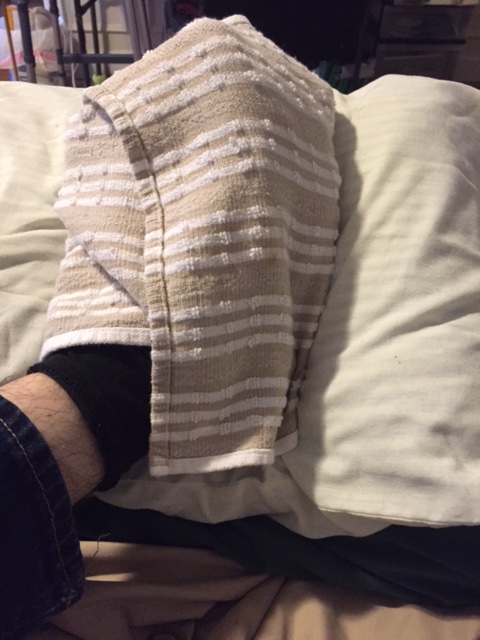
I can deal with the pain, but what scares me is what the underlying pain will mean to my future. Tomorrow morning I go for x-rays. Is it a sprain? A small fracture? I have no idea. My foot, six hours later, still hurts a lot, although the pain has been dulled by my trusty frozen bag of butternut squash.

IMG_1379
Ugh.

I hope and pray that it is just a sprain, and not a break. I cannot afford to be off my feet for any length of time, or even in a walking boot for that matter. I don’t have the strength or stability to walk in a boot. If I am stuck in a seated position, I will get weaker even faster, which is especially concerning since I have gotten noticeably weaker in just the last few months. To speed up the weakening process means that my walking days are numbered.

As I sit propped up in bed, surrounded by phones, remotes and pillows, I am thinking about what comes next. I try not to dwell on the future, partly because it is a scary place but also because there is so much unknown. As my friend Rhamy cheerfully likes to say when I worry about what lies ahead, “Hey, you could always get hit by a bus.” With that uplifting piece of advice in mind, I try to live in the present as much as possible. I accept my situation, but this is still a scary world I live in and that I will never get used to.

I’ve learned that it’s okay to be afraid – perfectly normal – but now, more than ever, I must put on the face of resilience. Every time I share my story with audiences I talk about what has helped me overcome adversity when times get tough, and I must take my own advice to heart right now. I don’t know if that gives me more credibility or less to talk on the subject, but that isn’t my concern at the moment. All I care about right now is trying to stay afloat on an angry sea of adversity, fearful that the anchor I threw over the edge of the boat won’t find the bottom in time.

I don’t know what tomorrow will reveal. I am hopeful that it is just a sprain. But if it is more than that – a fracture, no matter how small – this could be the beginning of the end of my time walking. It is a future that will come at some point, but I hope that time isn’t now.

My foot is starting to get wet. My butternut squash is beginning to leak so it looks like it is time to wrap up this post. I’ll keep you all updated. Thoughts, prayers, whatever you like to give to others, are welcome right now. I’ll take whatever help I can get.

Unlike my leaky bag of squash, I’m not ready to give up. Hopefully my body feels the same way.

Walking Together


The greatest outcome from sharing my story with the world has been the opportunity to help others. Since I finally opened up about my condition four years ago, my life has taken a turn for the better. Through writing and speaking about my patient story, I’ve had many wonderful people come into my life, from high school classmates I’ve reconnected with to complete strangers who were moved to contact me in some way. I am not terribly comfortable as the center of attention, but I do it because I believe that I am part of something much larger than myself.

To be honest, I don’t consider my story to be more inspirational than anyone else’s. I’ve said that many times before. Have I dealt with a lot? Absolutely, and I won’t sell myself short there. But at the same time, I am not the only one who has persevered in this world. I don’t have the market for inspiration covered, as I know of countless others who have dealt with even greater burdens. They are the people I turn to when I need to be picked up after a tough day.

Rather, what sharing my journey has shown me is that there is a great unmet need in society for impactful stories. Everyone these days is struggling with something, and far too many suffer silently. They walk the lonely road that I stumbled down years ago. People need to be reminded that they are strong enough to get through whatever it is that gets them down, and the best way to accomplish this is to hear the stories of others. People need to hear the good and the bad, the successes and failures. Meaningful, authentic stories connect with people on an emotional level like no other story can.

The need is great. I don’t say that as an exaggeration or as an indictment on society; it’s my observation from firsthand experience. Everyone is struggling with something. This is a favorite phrase of mine. My disease has (thankfully) made me more empathetic, to the point where I can identify easily when someone is having a tough time. It is sort of like my sixth sense.

Lately I have been receiving around 1-2 emails and messages per month from complete strangers. They usually ask me for advice or thank me for sharing my story. I am flattered, sure, but more than anything I want to help each person. Sometimes I have answers, sometimes I don’t. But if I don’t, I try to at least steer them in the right direction. I don’t want anyone to encounter me and not have their situation improve in some way.

I’ve thought a lot recently about how I can help people on a greater scale. For everyone that reaches out to me, I wonder how many others read or hear my story but are hesitant to reach out. I wonder even more how many people out there would benefit from hearing anyone’s story, let alone my own.

I realize that I can do a better job of communicating on here what has helped me on my journey these last few years. As a result, I am going to write about, in a series of posts, various pieces of advice. Each post will cover a specific topic that I will briefly outline below. You can find these posts under my new column heading, “The Adversity Playbook”. My hope is that, for anyone who stumbles across my website, they can use my experience as a starting point on their journey. Bumpy roads don’t have to be lonely roads.

I am not an oracle who has all the answers. I have made my mistakes along the way, and there are some days I go against this very advice I am about to tell because I am tired, stubborn, and/or frustrated. In short, I’m human.

I make this list as a jumping off point. It is only meant to scratch the surface of what I hope to write about in future posts.

Without further ado:

  1. Don’t go at it alone!

I can’t emphasize this enough – life is not meant to be lived in isolation, especially when you are going through a tough time. It is natural to feel isolated when the world around you cannot relate to your situation, especially if it is a disease. But the sooner you recognize that you can’t go at it alone, and more importantly, that you are not supposed to go at it alone, it changes everything. I am living proof of that. I wouldn’t be where I am at today if I didn’t reach out to my family, friends and coworkers and humbly admit I couldn’t handle my situation anymore. I needed a helping hand, and I got hundreds of them in return.

Asking for help is not easy, but it is crucial. Trust me.


  1. Seek out others who are going through a similar ordeal

Another helpful piece of advice is to seek out others who are going through something similar to what you are dealing with. If you Google the issue – whether it’s a disease, a failure, a setback, whatever it is – you will undoubtedly find someone who has gone through it or who understands how you feel. It builds off the first point – community is essential. If you have a disease, rather than shut yourself in (which is the natural human reaction), seek out others who can understand what you are dealing with. Join a Facebook group, or an organization whose mission is to find a cure or provide services and support. It seems intuitive, but I know of many people who don’t do this, and it makes me sad.


  1. Don’t be afraid to fail

I am no longer afraid of failure, which is a good thing because I’ve encountered it over and over and over again, especially this year on my job search. I can stomach it because I have come to realize that anything worthwhile in life requires risk, and nothing worthwhile is given to you on the first try. If you fail 99 times out of 100, the one time that you succeed outshines the other 99 failures.

This notion has sustained me every time I fall. I am past the point where I can pick myself back up on my own. Every fall is a reminder that my body is failing me. But every time I end up back on my feet, and I take my first step on solid ground, I realize how worth it it is to get back up.


  1. Share your story!

When you get through the difficult times – and you will – share your story with others. When I finally opened up about my journey and wrote my first article – a piece for the Jain Foundation (whose mission is to find a cure for my disease) – a weight was lifted off my shoulders. Sharing your story will empower you and give you confidence, and just as importantly, it will help others. It doesn’t take much. Trust me, your story is not boring, and it will have an impact. Any small impact, even if it brings a smile to one person’s face, makes it worth it.

Keep in mind, the moment you overcome your difficulties, someone is experiencing that hardship for the very first time, and they don’t know where to turn. You can be that beacon of light for someone else, as only you can.

_________________________________________

If you have any questions about any topic on here, or anything that is not covered, please don’t hesitate to reach out to me, chrisanselmo@gmail.com.

Undefeated and Unbroken

My first year of business school will be over in three weeks.

That statement makes me feel a whole range of emotions. I’m relieved that the nonstop grind of the last ten months is almost over. I’m sad that I won’t see most of my classmates for three months, and that it will be the last time that we all take classes simultaneously. I’m thankful for the many friends I have made, and for their generosity and help in making my first year manageable. I’m excited for the opportunity to live in New York City for the summer, to intern at Pfizer, and for the many wonderful opportunities that lie ahead in the second year.

I look back on my hopes and dreams when I started orientation last August and feel like I am living the best-case scenario. Back then I worried about whether I would make any friends (a dumb concern in retrospect, but any time you are with a new group of people, you never know), whether I still had the brain cells to navigate an MBA curriculum, and whether I would have an experience that would justify both the tuition and the opportunity cost of leaving my job.

Although I am living the best-case scenario, it has not been a walk in the park. Like the rest of my classmates, I have had to fight for every success and have encountered many failures along the way. It is humbling (and also quite frustrating) to be rejected by so many employers, but one of my greatest areas of growth in the last year has been in handling rejection. Rejection is part of life. It always feels unfair because we know what we are worth and what we are capable of. Unfortunately, others have little information to go on besides a resume or a snap judgment.

As I reflect on the numerous ups and handful of downs from the past year, I wanted to write about two examples I saw recently on TV that got me thinking about the subject of adversity.

A couple weeks back I was watching the NCAA tournament. Kentucky was undefeated and in the Final Four, looking to fulfill their destiny of winning a national championship. No team has ever gone 40-0 in a season, let alone 38-0, which was their record at the time. The last undefeated team going into the Final Four was UNLV in 1991, with the last team to go undefeated being Indiana way back in 1976. These dominant teams come around once in a generation, and it could be argued that this Kentucky team was the best of the best.

As fate would have it, they ran into a Wisconsin team that was hungry for revenge from last year’s Final Four matchup, which Kentucky won in the final seconds. This time, the Badgers shocked the world and knocked out Kentucky 71-64, ending Kentucky’s chance at a perfect season. The Wildcats didn’t play their best game, and their dreams were shattered as a result.

I understand the disappointment of the players. There was only one goal in mind all season – to win a national championship. Many of them could have been stars at other schools, but came to Kentucky for the chance to win a title before heading to the NBA. With this one loss, all their accomplishments were for naught, and their season is now considered a failure, as cruel as it is to say.

After the game ended, many of the players walked off the court without shaking hands with their opponent. In the press conference, one of the players cursed a Wisconsin player under his breath, except that he made the mistake of leaning into a live mic, enabling the world to hear his true thoughts.

I am not going to sit here and write about how well I handled things when I was 18 or 19 years old. I made many stupid, cringe-worthy mistakes at that age. Kentucky had everything break their way during the season, so to have it all come crashing down from one bad game is unfortunate. However, we are often tested with situations like this in life, where everything is going well and then the worst happens. The better we deal with it at the source of the pain, the easier it is to overcome. There is no doubt that someday they will look back on how poorly they handled themselves after the loss and cringe. It is a part of growing up, and is unfortunately one of those situations we only learn from through firsthand experience. Handling it poorly makes the disappointment worse, but its hard to know that at the time.

The next night, tired after a day of homework, I decided to rent Unbroken. I read the book over winter break, about the amazing life of Louie Zamperini, and felt that I needed inspiration on that night. I was getting bogged down by schoolwork and was losing perspective on why I was enduring so much stress. I knew going in that the movie didn’t live up to the book, and it certainly didn’t. To be fair, it was impossible to jam everything that happened in the book into a 2+ hour movie, but it still felt like the CliffsNotes version of his life, even leaving out his troubles after the war.

Watching it still produced the desired effect – to inspire me to keep grinding. After all, my school stresses were insignificant compared to his struggles. I didn’t have to survive 47 days on a raft or spend three years in Japanese POW camps. It is always inspiring to know that someone can experience the worst that life has to offer and ultimately fight through it.

These two examples are proof that it is impossible to navigate life without having to deal with obstacles we’d rather not face. Yes they are extreme examples, but even in smaller doses we are going to face situations in life that we cannot control, that force us to remain level-headed under pressure. It is cliché but it is true – we learn more about someone by how they handle adversity than by how they handle success. Anyone can handle success well (although many still don’t), but it is when things go south that we see what people are made of.

The best part of this year has been learning that I can hold my own through these ups and downs. I’ve never experienced a year like this – stepping firmly out of my comfort zone, constantly meeting new people, navigating an aggressive curriculum. Every week has been a packed schedule with classes, projects, group meetings and other responsibilities that a business school student has to face. There were numerous situations that I could have handled better, but I learned from them and moved on. My GPA is respectable, my reputation is intact, and I can still amble around from class to class. If the spectrum of handling adversity is the Kentucky basketball team on one end and Louie Zamperini on the other, I like to think that I am a tad closer to Louie.

It still boggles my mind how fast life moves sometimes. I am almost at the end of year one. One year down, one to go. I can take it. I can do this. And that confidence is the greatest feeling of all.