Singin’ in the Rain

This is the second letter in a two-part series looking back on life in my 20s. Today’s post is a response letter written from my current, 30-year-old self to my 23-year-old self. The first letter in the series can be found hereTo learn more about the series as a whole, click here


Dear Chris,

Greetings from the future! 2016 is an interesting time to be alive, to say the least. Apple is about to release the iPhone 7. Pluto is no longer a planet. NFL games are now being broadcast on Twitter. Brangelina is no more. I won’t even get into what is going on in the presidential race – you wouldn’t believe me even if I told you.

Before I go any further, I have to admit, I have no idea how to address you – you are me, I am you, right? Either way, I am treating you as a separate person for the purpose of this letter. As your older self, I am basically your older brother anyways.

Technicalities and jokes aside, you brought up some very serious concerns at the end of your letter that I want to discuss. You asked a lot of questions – deep, existential questions – yet you seemed hesitant as to whether or not you wanted to hear the answers to them. I initially considered going into great detail and telling you exactly what will happen, but I have decided not to do that. Frankly, there are some things that are better left unsaid, some experiences I don’t want you to have to come to grips with at this moment. It would be counterproductive, and it would get you too concerned about specific details that would detract from the overall message I want to convey.

The next seven years for you are going to be full of situations and events that, if I describe them now, are going to sound terrifying, but are easier to comprehend in the proper context. The best context is to experience these moments as they happen. There is no substitute for living through your circumstances. It would be unjust to try and condense them into the framework of this letter.

There is going to be rain ahead – there is no avoiding it. Parts of this letter will scare you, even if I don’t go into specific, day-by-day details. But let me reassure you when I say, for everything that will happen, you will have the support you need to get through it. Trust yourself, lean on your family and friends, and you will make it through the rain.

I know you were most anxious to know my current status, so I will save you some anxiety and let you know that yes, I can indeed still walk, although with great difficulty. The neurologist’s prognosis, I have to say, was spot on. You are going to experience increasing muscle weakness over the next seven years, leading up to the condition I am in today – still walking, but quite weak. To picture it, I walk around and have the balance of someone who has been up all night drinking. I’m sure you have NO idea what that’s like….look it up it if you have to.

The path ahead is going to be as bumpy as you imagine, and then some. This disease is going to test what you are made of each and every day – physically, emotionally, mentally and spiritually. You are going to have to live through this process.

But each experience, every bit of adversity that you will face, will help to forge your character. My identity today is a testament to all that I have learned because of this disease. It will turn you into a more caring, empathetic individual. Your relationships will be deeper, and as you share your vulnerabilities with others, they will return the favor. Every person you meet is coming into your life for a reason. Trust me on that – I have the benefit of hindsight. You will have many more friends than you have now, people who sincerely care about your well-being. Cherish these relationships – they are everything.

I know you are probably still worried, no matter my reassurances. Worry has always been a big part of the equation. It will never go away – in fact, I still worry to this day. The key, however, is to control worry to the best of your ability. It’s a voice within that you can either choose to hear or ignore. Besides, no one ever quite vanquishes fear.

Mark Twain summed it up best: “Courage is resistance to fear, mastery of fear, not absence of fear.”

Setbacks will happen, including falling, but you must pick yourself up, wipe the dirt off your shoulders, and move forward. How is this possible? Although I will not divulge specific events, I will give you some advice that will allow you to persevere. I will tell you what I’ve learned, so that you are more prepared when the time comes.

Consider this letter not everything you want, but rather, everything you’ll need.

At the end of the day, it all comes down to you. There are some things that you will not be able to change – this disease for example. There are some things that you will want to change, like trying to find a cure as quickly as possible – that ultimately is also out of your control. These external forces will weigh on you and beat you down, but the only way you will truly rise above your challenges is to separate what you can control from what you can’t, then work like hell to make the best life for yourself based on what you are able to change.

You alone can control the inner discourse in your mind. You have the power to be positive, just as you have the power to be negative. The next seven years will be a continual battle between the two, but being positive is a possible outcome. I would argue it is a necessary outcome. You can create for yourself misery or happiness, no matter your circumstances.

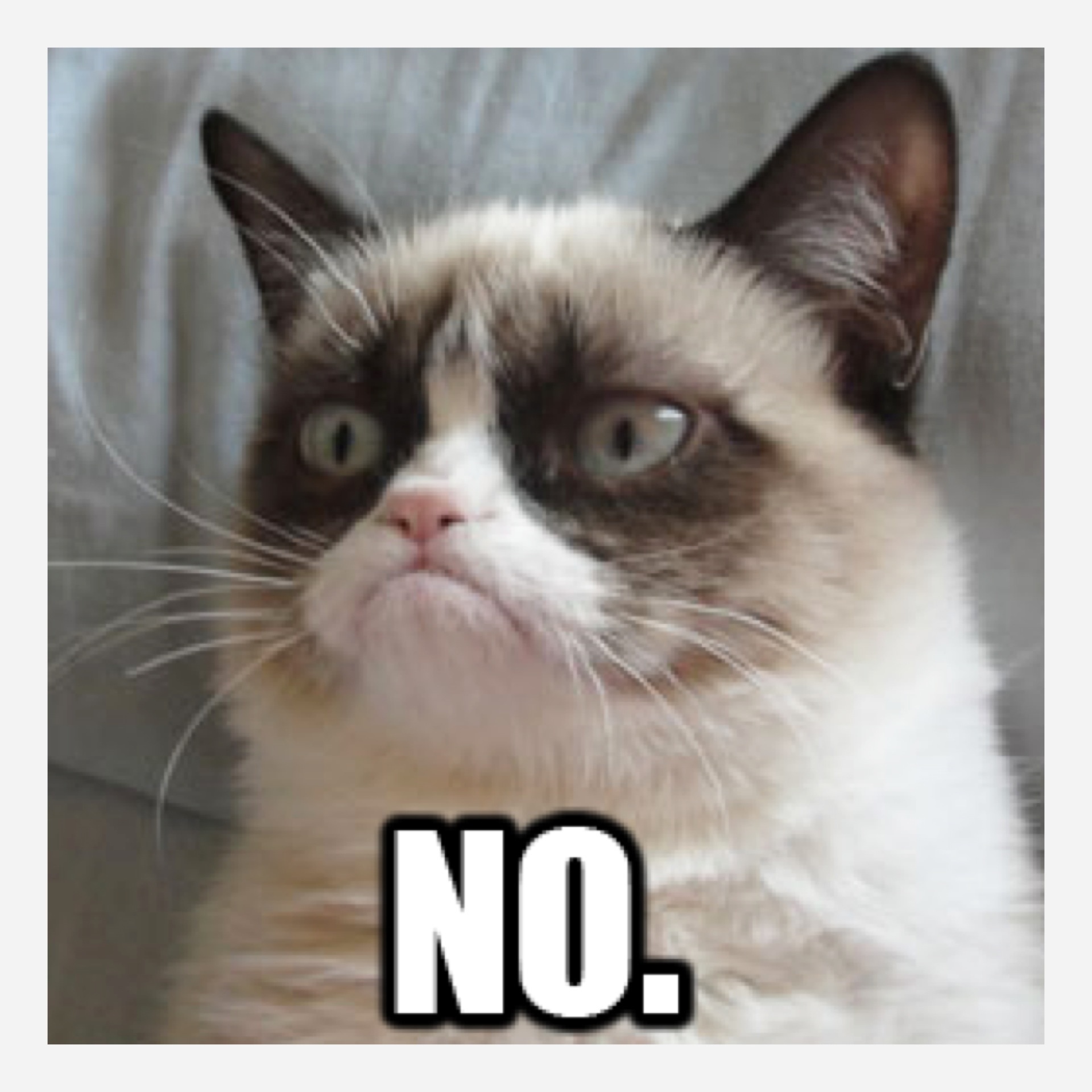
It will take practice. To this day, I still struggle to be positive, and even on my best days, I’m not Mr. Optimist. In fact, you will soon learn about, and be compared to, Grumpy Cat. That is correct – your future coworkers will compare you to a real-life cat with a permanent frown. But as long as you strive for optimism as an ideal, that is the greatest step you can take.
grumpy_cat_06-freelargeimages-com
Your spirit animal.

That is not to diminish the difficulty of the time ahead. The symptoms, as you are experiencing, are starting to manifest, and you soon will lose abilities you once took for granted. Emotionally, it will be difficult to grasp and comprehend. You will get discouraged, but I say let it happen. Grieve for the able body you used to have. During this time, focus on staying afloat, moving forward in your life where you can. Enjoy life to the best of your abilities. Absorb the traumatic experiences, because someday they are going to be the key to your success. But grieve, then let it go. You can cry all you want, but once you are done crying, the situation remains unchanged. The disease is still present. If you don’t resolve to move on, you’ll be stuck in sadness forever.

Part of the sadness will be due to the fact that your body will soon need assistive devices. This is a hard reality to accept, but it is vital that you don’t deprive yourself of anything that can improve your mobility. When you identify the need, embrace assistive technology sooner rather than later.

The fear of losing the ability to walk will consume you. The stigma associated with using crutches, a scooter or a wheelchair isn’t easily overcome. But you must understand that the positives far outweigh the negatives. For example, I just started using a scooter within the past couple of years. At first I was hesitant, but once I realized that I could venture down the street without worrying about falling, and that I could take random turns down side streets without regard for distance, it was liberating. Besides, assistive technology has improved significantly in the last seven years. There are robotic exoskeletons that allow the paralyzed to take steps. Even wheelchairs have improved – they now have models that allow a person to stand and have conversations with people at eye level.

I know at your current stage, thinking about assistive technology is frightening. After all, what will people think of you? The truth is, no one really cares! I mean, sure, some people will stare, but not as many as you think. People nowadays are so absorbed in their smartphones, and those not on their phones are so afraid to make eye contact with strangers that they stare at the ground. We have become an introverted generation. As for the people who do stare, or who make an off-hand comment about you or underestimate you based on your disability, they are not worth your mental energy.

You must not let every little perceived slight bother you. Some people will talk about how the world is ableist, and they will indict society for being unwelcome to the disabled. And yeah, ableism does exist, but if you get offended by everything you experience (a stair to enter a building, or a low toilet), and if you internalize each slight, it will eat you up on the inside and give you unnecessary stress. There is always a time to speak up, but I believe that if you can choose between partnering with others to find solutions or blaming them, seek solutions. I have found that many people are not intentionally ignorant, and once they have been educated, are more than willing to make accommodations and help you out.

Your story, once you have lived through the difficult times, will be tremendously powerful to others. That is part of the reason I want you to live through these experiences without forewarning. This painful wisdom will one day be the source of great strength. You don’t yet know this, but you are a natural storyteller. It may seem difficult to grasp now, but there will come a time when you will get on stage in front of 500 people without any fear. And to think, more people are afraid of public speaking than of dying! You will become masterful at sharing your patient experience. It will educate people about disability and help to inspire others to overcome adversity in their own lives. It will enable you to connect with people on a deeper level, a level that people rarely experience in their day-to-day interactions. Your faith in humanity will be restored.

Everything positive that will happen for you will come as a result of sharing your vulnerabilities. Your story will help others, and it will help you as well. Doors will open for you that never would have opened without this disease. These exciting opportunities will make what you are going through much easier to deal with. It will give you a purpose you’ve never had before, and a motivation to maximize your impact on the world. If you didn’t have this disability, would you have the same level of empathy and appreciation for others? Honestly, I don’t think so.

However, you can’t get to where I am at today without going through the dark times. Although a difficult period of your life is ahead, it will serve a noble purpose. It is the training, the wisdom you need to gain, to fulfill your mission in life.

There were times – times that you will soon experience – where I wanted to blame God for everything that has happened to me and turn away. Look, you have every right to be upset, but trust me when I say that it all makes sense now. The hurt you will feel, the fear of the future, the anger – they are a natural part of the grieving process. There will be many moments that will seem unbearable when they happen, but only later on will you truly know why they occurred. It may take a few years to fully understand, but you’ll figure it out eventually. God knows what he’s doing, so you just have to trust the journey.

In fact, the day you wrote your letter is a perfect case in point. That three mile walk you went on after coming home from the doctors? It is no coincidence that your path took you back to Boston College, the scene of your first major rejection. In a couple years you will begin thinking about getting an MBA. Let’s just say they will not be sending you a second rejection letter.

As I said before, doors will open for you, and they will make this life worth it. I have achieved many goals, although I haven’t achieved all of them yet. I am still looking for a significant other, and given that I am at peace with a lot of what has gone on in my life now, I like my chances! Other unfulfilled goals include winning a Pulitzer Prize and an Academy Award. You might think I’m crazy, but I say shoot for the moon. Even in a weakened state, it is important to take risks, and not be afraid to fail.

In closing, although I’ve covered a lot here, it is impossible to explain everything that will go on in the next seven years. You will deal with emotions and experiences that will seem overwhelming at the time. Countless band-aids will be opened to stop the bleeding, numerous painkillers taken to soothe the pain. Tears will be shed. But, no matter how many times you fall, no matter how dark the clouds are overhead, don’t give up.

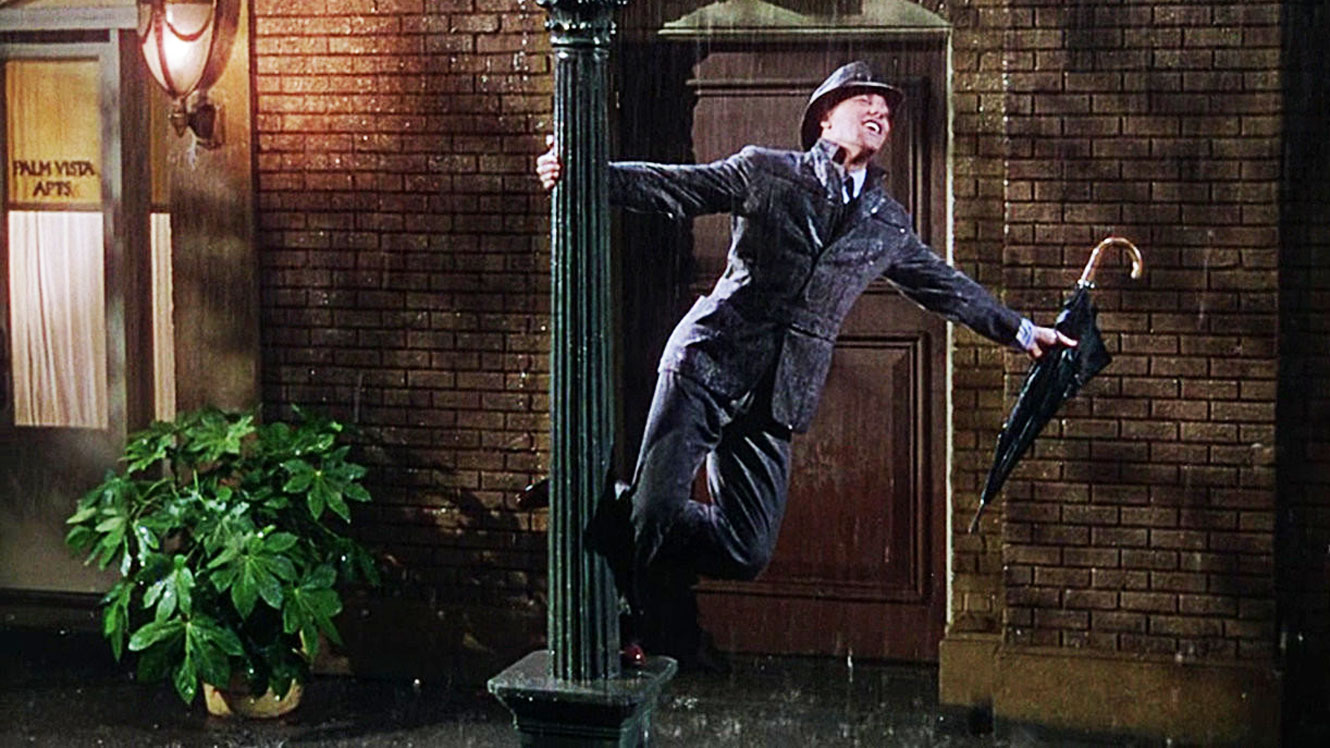
The rain is unavoidable; you might as well splash around and enjoy it.

All the best,

Chris Anselmo

September 28, 2016
singin-in-the-rain-di
Metaphorically sing, but please, for the sake of others, do not actually sing.


P.S. – I have spent a significant amount of time trying to see if I can share with you winning Powerball numbers, but I have to find a way to ensure I don’t create a ripple effect that will have disastrous consequences. Last thing I need is to become a millionaire, buy a spacecraft I don’t need and crash into an asteroid. Let me get back to you on this one.
The Gathering Storm: A Letter from my Younger Self

This is the first letter in a two-part series looking back on life in my 20s. Today’s post is a hypothetical letter written from my 23-year old self to my present-day self. In November 2009, at age 23, I went to a doctor’s appointment that would change the course of my life. This letter captures my thoughts and emotions right after I left.

To learn more about this series, click here


Dear Chris,

I’m desperate. I need answers, and I need them now.

I’m sitting here on a bench in the sky lobby at Beth Israel Hospital. I just came out of my first neurology appointment, and it was traumatizing.

Words are hard to come by at the moment. I’m dazed. My body feels heavy, almost detached. I’ve been staring right into the sun reflecting through the window and I don’t even care.

So many thoughts are running through my head, so many emotions. Above all, I’m afraid. My future has been turned on its head, and I don’t know which side is up.

The doctor confirmed that I do indeed have dysferlinopathy, which matches the diagnosis I was given in high school. That part isn’t shocking – that’s why I scheduled the appointment. Unfortunately, I learned for the first time today what that diagnosis actually means for my future.

It turns out, the weakness I felt in my legs while running wasn’t because I was out of shape, it’s because I’m getting weaker. Now. At age 23.

I had a sense it was related to my disease. I haven’t felt right for a while, and I’ve noticed that I don’t gain strength at the gym anymore. I just went for a run the other day and could only run for a few minutes before fatiguing.

I don’t know what I expected the doctor to say, but I guess I felt that deep down it was a condition I could manage somehow, or that if I rested and did low-impact exercise, the strength would come back. I thought maybe I was stressed out or overdoing it, even though I am as active as the average person. It never occurred to me the strength, once it left, was gone forever. I never expected that I would weaken this quickly.

I told him that I thought it was something that would happen to me later in life, at a slower rate, and that it would be a minor nuisance more than anything. He shook his head and told me the symptoms are already manifesting. Already manifesting? How is this possible?

I’m sure you remember this day well – I know I’m not telling you anything you don’t already know. But please bear with me. I just don’t have the benefit of hindsight like you do – I’m living it for the first time right now. It sure feels like this is a turning point in life. Is it? Is there no going back to the way things were after today?

He said I might not be able to walk by the time I’m 30, that many people are not ambulatory by that age. He tried to reassure me that since there are so few patients, the variability in the disease progression is great, so nothing is set in stone. But what’s the difference if it doesn’t happen by 30? It’s going to happen, probably within the next ten years.

Well, future Chris, am I still walking at 30?

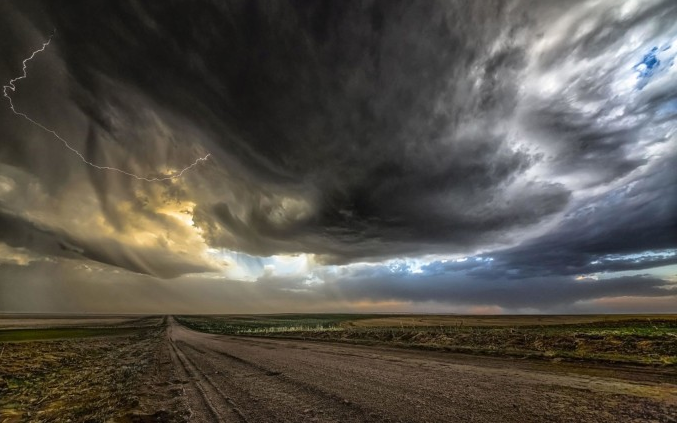
I’ll be honest, I don’t see how I can go back to living life the same way with this knowledge. I feel like the storm clouds are gathering in the distance, and life is going to become increasingly difficult. I can feel the anxiety build within me. I probably am overreacting, but I’m not thinking rationally at the moment. I’m tired, I’m stressed, and this is a lot to process mentally.

Speaking of being rational, how the hell could I have been so naïve? I’m someone who always tries to be objective and collect the facts. How could I have gone through college without bothering to research what this disease will do to me? I should have known. I feel irresponsible, like I let myself down, wholly unprepared for what I would hear today.

If I knew, I would have studied abroad. I would have traveled. I would have gone on Spring Break. I would have prioritized my life differently. I would have done so many things had I not been so blissfully unaware and ignorant. I’m an idiot.

On the other hand, thank God I was blissfully ignorant. For four years I didn’t have a care in the world about this disease. What if I had been aware of what was to come? Would I have had the same experience? I say that I would have traveled and done all these fun things, but is that true? Maybe I would have been too depressed to go outside.

The truth is, I’ll never know. The facts are the facts, and I’ll debate the pros and cons of knowing earlier another time. Right now, I’m just so overwhelmingly….devastated. I know it’s not a death sentence, thank God, but life is not going to be the same. The more I think it through the more I grasp the enormity of it all.

There was one moment today that was especially difficult. Towards the end of the appointment, as I sat there on the table processing the doctor’s words, I found myself stalling, trying to avoid asking the one question I knew I had to ask, but already knew the answer to. Eventually I mustered up the courage.

Are there any treatments?

He leaned back in the chair before answering, which I knew was a bad sign. He admitted it was going to get worse, that I could eventually end up in a wheelchair, but unfortunately, there’s nothing they can do to stop it. He cited some trial in Germany or something, but he said it was ineffective. Instead, he stressed the importance of controlling the disease, to slow the progression. Eat well, get plenty of rest, don’t exercise too hard, don’t drink too much, that sort of thing.

He probably said more after that, but I had spaced out by that point. He ended by recommending that I go see a physical therapist in order to maintain my strength, but seriously, what’s the point? No matter what I do, it’s going to get worse. Even if I delay the symptoms, they are eventually going to manifest.

As I sit on this bench, I can’t help but wonder what life will be like at 30. I need that answer. I need to know what to expect in the next few years. I am done with the blissful ignorance. I have so many questions, questions that I am afraid to ask but I have no choice. I’m trying to suppress my thoughts, but my subconscious is tormenting me.

Please, be honest. Will I be able to overcome this?

Will I be able to plan for my future?

Will I be able to buy a house?

Will I find a girlfriend who will accept me despite my disability?

Will I look at myself differently, or be treated differently by society?

Am I going to fall and break something?

Will I be depressed?

Will I still be walking?

And I hate to ask this, but it’s really eating me up inside – is this life worth it? Will I be happy?

On second thought, I don’t know if I can handle the answers to these questions. I’m clearly scatterbrained right now, but I’m so scared. So much in my life is going to change if I’m getting weaker. There is so much I haven’t done, so many things I’ve taken for granted that I know I’m going to lose the ability to do. I am already low on self-esteem and confidence to begin with. To not be able to walk, or lift my arms to feed myself – this seems like it is going to be too much to bear.

Oh what am I saying, I need to know! Please, don’t hold anything back. Tell me what is going to happen so I can prepare to the best of my ability. So I can enjoy the mobility I have now before it’s taken from me. I need a map, a compass, anything to get me through this storm that’s coming.

Above all, I need hope.

Sincerely,

Chris, age 23

November 20, 2009


A Lifetime in a Decade

Next week is the big 3-0. To be honest, it feels like just another birthday. Don’t get me wrong, I am blessed for every day I am given, but the number itself doesn’t make me feel any older than I already feel. At this very moment, for example, I am writing with a pulled muscle in my neck from the physically demanding action of rolling over in bed. If anything, 30 gives me a chance to take a step back and assess all that has happened in the last ten years.

My 20s, to say the least, have been difficult. Lately, I have found myself in a reflective state, thinking about what I have been through over the last decade. After all, my entire disease progression took place in my 20s. It was shortly after I turned 21 when I first noticed muscle weakness. It feels like a lifetime ago that my body was in shape and fully able.

So long ago, in fact, that I am rapidly forgetting what it feels like to run, jump, or walk without fear of falling. That is why I cherish dreams where I am running and active; although it’s cruel when I wake up, they are momentary escapes from my current, limited reality. I do, however, vividly remember the feeling when I first realized the magnitude of what I was up against.

The first scarring moment on my journey was not when I pulled up lame while going for a run, or when I was frustrated that I was not gaining strength at the gym. It was actually a year later, in November 2009, when I had a fateful appointment with a neurologist at Beth Israel hospital in Boston. That day, I gained insight into what my diagnosis really meant, and what was in store for me going forward. The naïve belief that I was missing an insignificant protein that would have little impact on my quality of life was debunked for good. The neurologist was a nice guy, but the information he provided – specifically the prognosis and lack of research being done – was a harsh jolt of reality. I left the hospital that day perplexed, and above all, afraid.

I think about how I felt then, and where I am now emotionally. The cloud that formed over my head that day has not left. Some days it rains, other days it thins out so light can shine through. But it’s always there, and, to be realistic, always will be. I’ve experienced so much since that day, the disease uncompromising in its steady progression despite my vain interventions.

What is undeniable about this turbulent period is that it has provided me insight and wisdom I otherwise would not have gained. Adversity has forced me to ask deep questions about the meaning and purpose of my struggle, and of life as a whole. It is a life that has not been easy, and will only get more difficult with each passing day.

But I’ve grown, there is no question. I am far more prepared today to deal with the hardships to come than ever before. And they will come.

I think back often to that day at Beth Israel. I figured, based on what the doctor was saying, that I had five years left to walk, at best. He said many patients are no longer ambulatory by age 30.

I had so many questions, so many fears. All I could think about was what my life would be like when I got to 30. Would I be walking? Would I be happy? Would life still be worth living?

To commemorate turning 30, and since I don’t want to do a cheesy “20 things I learned in my 20s” type list, I am going to instead write two posts in the coming week. First, I will compile my thoughts and fears on that November day in 2009 and write a hypothetical letter to my 30-year old self, asking how life turned out. Then, next Friday, I will write my answer.


The Whole Story

Over the past few months, several people have asked me if I am going to write a book about my patient experience. Although my natural, self-effacing reaction is to think that I am the most boring person in the world, when I take a step back and assess the last eight years of my life, I realize that I have been through a great deal physically and emotionally. There is a story in there worth telling, even if it only resonates with a niche audience.

The truth is, I’ve always wanted to write a book, but I never thought I’d write a memoir. I’ve always had fictional stories running through my mind, but it wasn’t until recently that I considered writing the most truthful story I know – my own. I have been hesitant to get started, because the task seems so, enormous. Writing a book is an endeavor not to be taken lightly. It will be time-consuming, and will require a healthy dose of patience mixed with frustration, as I try to properly convey complex feelings. It will take me back to times that I’d rather forget, and experiences that still send a shiver down my spine.

I have been hesitant to get started, but I’ve been thinking a lot about it, no question. Recently, however, I got the final nudge I needed to decide that yes, this is something that I am going to do, no matter what it takes.

The final straw was a memoir I read this past week, When Breath Becomes Air, by Paul Kalanithi. It is the story of a 36-year old neurosurgeon coming to terms with a diagnosis of Stage IV lung cancer, after spending a career at the intersection of life and death. The book made a tremendous impact on me, and judging by its success (25 weeks and counting on the New York Times Best Seller’s list), it has made an impact on many others as well.

The way he told his story – honest, raw, vulnerable – left an impression. That’s the power of storytelling. Although my disease is not life-threatening (thank God), When Breath Becomes Air forced me to think about my story – what I wanted to tell, and how I wanted to tell it.

So that’s what I’m going to do: I’m going to write a book. It’s an exciting thought but also one that I will need to repeat over and over again to keep myself on track.

That’s the caveat – I am not always the best at following through on things. It’s a sad truth that annoys me every day, but is part of my track record. For example, I remember when I started this blog I was adamant that I would post every few days. Didn’t happen. I told my entire business school class at orientation about the screenplay I was writing. Never finished it (or to put a more positive spin on it, I am waiting for it to write itself). Writing a book is a process; a long, arduous process. I can easily see myself getting discouraged and abandoning it halfway through. I hope that’s not the case, but it can’t be discounted.

If I finish, sorry, when I finish, will it be a Best Seller? Although many people are motivated to write a memoir for this reason, let’s face it, it’s highly doubtful. Success, though, should never be about books sold, especially when you are writing your own story. Instead, a true barometer of success should be in the number of lives positively impacted. I don’t pretend to have the most inspirational story in the world – that’s something I’ve always said – but judging by the reaction to my writing and my public speaking, I have at least figured out how to tell it in a compelling way. My experience is going to resonate deeply with some, and it might just be a good, casual read for others. Some will read a few pages and abandon. I’m ok with that.

But let’s not get too carried away daydreaming at the moment. I can’t start dreaming about who will read my book if I don’t write it. I have to break it down into manageable pieces, into intermediate steps. How will I finish the story? Should I self-publish or hire a literary agent? Those are questions for another day. My first goal, right now, is to get my story – the chronological bare bones of my story – onto the computer. Then I can expand on some events and cut out others. Before I know it, a story with a coherent theme and structure will begin to take shape.

Baby steps.

No Break!

I wanted to let you all know that my foot, thankfully, is NOT broken! Getting x-rays on my foot was a bit unnerving however. I hope I don’t have to go back any time soon.

They weren’t clear if it was a strain or sprain but they are thinking it was a bad strain, which I’ll take given the circumstances. Still quite sore, especially when it rubs up against my leg brace, but I at least feel some improvement today.

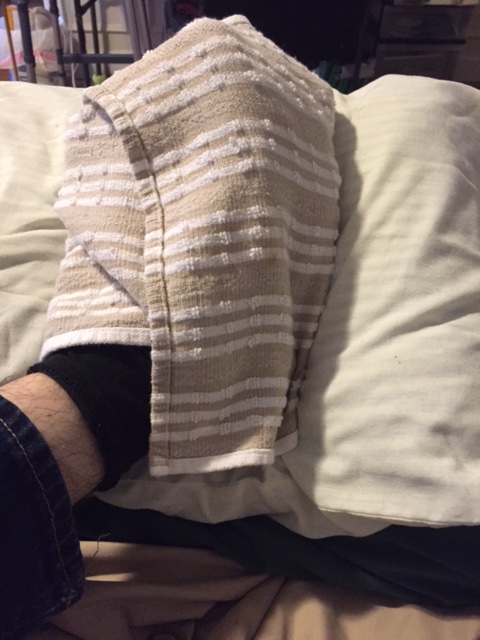
To thank my bag of butternut squash for its emergency service as an ice pack, I will eat it with dinner tonight. After all, that’s the dream of any bag of vegetables, right?

Troubled Waters

I don’t usually write after a disease-related traumatic event but today is different. I’m writing now because I need to distract myself, and quite honestly I don’t know what else to do.

I stumbled this morning when I looked out my window at construction taking place on my building’s exterior. It was early, I was exhausted, and I wanted to see if I should turn on my air conditioner to drown out the noise. As I was walking back to bed I bumped into a table, stumbled, and twisted my left foot.

I felt a shooting pain like I’ve never felt before. I don’t take proper steps, since my legs and calf muscles are so weak that my legs bow out. One little bump from a table and it is enough to cause my foot to roll over. The pain is concentrated below my pinky toe, on the foot itself. It feels like it is on a joint of some sort, or underneath, or on top, who knows. This is a new pain for me, and to try and isolate exactly where it hurts would only lead to more discomfort.

I can deal with the pain, but what scares me is what the underlying pain will mean to my future. Tomorrow morning I go for x-rays. Is it a sprain? A small fracture? I have no idea. My foot, six hours later, still hurts a lot, although the pain has been dulled by my trusty frozen bag of butternut squash.

IMG_1379
Ugh.

I hope and pray that it is just a sprain, and not a break. I cannot afford to be off my feet for any length of time, or even in a walking boot for that matter. I don’t have the strength or stability to walk in a boot. If I am stuck in a seated position, I will get weaker even faster, which is especially concerning since I have gotten noticeably weaker in just the last few months. To speed up the weakening process means that my walking days are numbered.

As I sit propped up in bed, surrounded by phones, remotes and pillows, I am thinking about what comes next. I try not to dwell on the future, partly because it is a scary place but also because there is so much unknown. As my friend Rhamy cheerfully likes to say when I worry about what lies ahead, “Hey, you could always get hit by a bus.” With that uplifting piece of advice in mind, I try to live in the present as much as possible. I accept my situation, but this is still a scary world I live in and that I will never get used to.

I’ve learned that it’s okay to be afraid – perfectly normal – but now, more than ever, I must put on the face of resilience. Every time I share my story with audiences I talk about what has helped me overcome adversity when times get tough, and I must take my own advice to heart right now. I don’t know if that gives me more credibility or less to talk on the subject, but that isn’t my concern at the moment. All I care about right now is trying to stay afloat on an angry sea of adversity, fearful that the anchor I threw over the edge of the boat won’t find the bottom in time.

I don’t know what tomorrow will reveal. I am hopeful that it is just a sprain. But if it is more than that – a fracture, no matter how small – this could be the beginning of the end of my time walking. It is a future that will come at some point, but I hope that time isn’t now.

My foot is starting to get wet. My butternut squash is beginning to leak so it looks like it is time to wrap up this post. I’ll keep you all updated. Thoughts, prayers, whatever you like to give to others, are welcome right now. I’ll take whatever help I can get.

Unlike my leaky bag of squash, I’m not ready to give up. Hopefully my body feels the same way.

Walking Together


The greatest outcome from sharing my story with the world has been the opportunity to help others. Since I finally opened up about my condition four years ago, my life has taken a turn for the better. Through writing and speaking about my patient story, I’ve had many wonderful people come into my life, from high school classmates I’ve reconnected with to complete strangers who were moved to contact me in some way. I am not terribly comfortable as the center of attention, but I do it because I believe that I am part of something much larger than myself.

To be honest, I don’t consider my story to be more inspirational than anyone else’s. I’ve said that many times before. Have I dealt with a lot? Absolutely, and I won’t sell myself short there. But at the same time, I am not the only one who has persevered in this world. I don’t have the market for inspiration covered, as I know of countless others who have dealt with even greater burdens. They are the people I turn to when I need to be picked up after a tough day.

Rather, what sharing my journey has shown me is that there is a great unmet need in society for impactful stories. Everyone these days is struggling with something, and far too many suffer silently. They walk the lonely road that I stumbled down years ago. People need to be reminded that they are strong enough to get through whatever it is that gets them down, and the best way to accomplish this is to hear the stories of others. People need to hear the good and the bad, the successes and failures. Meaningful, authentic stories connect with people on an emotional level like no other story can.

The need is great. I don’t say that as an exaggeration or as an indictment on society; it’s my observation from firsthand experience. Everyone is struggling with something. This is a favorite phrase of mine. My disease has (thankfully) made me more empathetic, to the point where I can identify easily when someone is having a tough time. It is sort of like my sixth sense.

Lately I have been receiving around 1-2 emails and messages per month from complete strangers. They usually ask me for advice or thank me for sharing my story. I am flattered, sure, but more than anything I want to help each person. Sometimes I have answers, sometimes I don’t. But if I don’t, I try to at least steer them in the right direction. I don’t want anyone to encounter me and not have their situation improve in some way.

I’ve thought a lot recently about how I can help people on a greater scale. For everyone that reaches out to me, I wonder how many others read or hear my story but are hesitant to reach out. I wonder even more how many people out there would benefit from hearing anyone’s story, let alone my own.

I realize that I can do a better job of communicating on here what has helped me on my journey these last few years. As a result, I am going to write about, in a series of posts, various pieces of advice. Each post will cover a specific topic that I will briefly outline below. You can find these posts under my new column heading, “The Adversity Playbook”. My hope is that, for anyone who stumbles across my website, they can use my experience as a starting point on their journey. Bumpy roads don’t have to be lonely roads.

I am not an oracle who has all the answers. I have made my mistakes along the way, and there are some days I go against this very advice I am about to tell because I am tired, stubborn, and/or frustrated. In short, I’m human.

I make this list as a jumping off point. It is only meant to scratch the surface of what I hope to write about in future posts.

Without further ado:

  1. Don’t go at it alone!

I can’t emphasize this enough – life is not meant to be lived in isolation, especially when you are going through a tough time. It is natural to feel isolated when the world around you cannot relate to your situation, especially if it is a disease. But the sooner you recognize that you can’t go at it alone, and more importantly, that you are not supposed to go at it alone, it changes everything. I am living proof of that. I wouldn’t be where I am at today if I didn’t reach out to my family, friends and coworkers and humbly admit I couldn’t handle my situation anymore. I needed a helping hand, and I got hundreds of them in return.

Asking for help is not easy, but it is crucial. Trust me.


  1. Seek out others who are going through a similar ordeal

Another helpful piece of advice is to seek out others who are going through something similar to what you are dealing with. If you Google the issue – whether it’s a disease, a failure, a setback, whatever it is – you will undoubtedly find someone who has gone through it or who understands how you feel. It builds off the first point – community is essential. If you have a disease, rather than shut yourself in (which is the natural human reaction), seek out others who can understand what you are dealing with. Join a Facebook group, or an organization whose mission is to find a cure or provide services and support. It seems intuitive, but I know of many people who don’t do this, and it makes me sad.


  1. Don’t be afraid to fail

I am no longer afraid of failure, which is a good thing because I’ve encountered it over and over and over again, especially this year on my job search. I can stomach it because I have come to realize that anything worthwhile in life requires risk, and nothing worthwhile is given to you on the first try. If you fail 99 times out of 100, the one time that you succeed outshines the other 99 failures.

This notion has sustained me every time I fall. I am past the point where I can pick myself back up on my own. Every fall is a reminder that my body is failing me. But every time I end up back on my feet, and I take my first step on solid ground, I realize how worth it it is to get back up.


  1. Share your story!

When you get through the difficult times – and you will – share your story with others. When I finally opened up about my journey and wrote my first article – a piece for the Jain Foundation (whose mission is to find a cure for my disease) – a weight was lifted off my shoulders. Sharing your story will empower you and give you confidence, and just as importantly, it will help others. It doesn’t take much. Trust me, your story is not boring, and it will have an impact. Any small impact, even if it brings a smile to one person’s face, makes it worth it.

Keep in mind, the moment you overcome your difficulties, someone is experiencing that hardship for the very first time, and they don’t know where to turn. You can be that beacon of light for someone else, as only you can.

_________________________________________

If you have any questions about any topic on here, or anything that is not covered, please don’t hesitate to reach out to me, chrisanselmo@gmail.com.

Storyteller

One of the greatest benefits of business school, besides the education of course, has been my evolution as a public speaker. When I started the program almost a year and a half ago, I was terrified to stand in front of an audience. I was fearful that my voice would crack out of nervousness or my mind would go completely blank. It also doesn’t help that I can’t stand for long periods of time anymore. My first presentation in school went about as awful as you’d expect – my mind went blank and I had to read word for word off the slide. It was painful to watch.

Thankfully, for both the audience and for myself, things have changed dramatically. I not only have improved my presentation skills, but I also have caught the speaking bug. Although I still get nervous and would rather not present on business topics, I can hold my own in front of my classmates. Part of my improvement has been due to public speaking classes I’ve taken at school. I’ve learned techniques and tips that have been extremely helpful in structuring my presentation and in controlling my body language.

However, the greatest reason for my success has been outside of the classroom. The opportunities I have had to share my patient story is what has truly gotten me over “the hump”. I am at my most confident when I am sharing my story with others, and talking about my journey, specifically what it’s like to go from ability to disability. After all, who isn’t comfortable talking about themselves?

I mean that jokingly of course. The answer is me. I am not naturally someone who likes to be the center of attention, under a spotlight both literally and figuratively. The first time I spoke about my condition in front of an audience, I thought I was going to have a panic attack and throw up on stage. Now though, I can recite my story almost without thinking. What I realized is that my journey these last eight years is so ingrained in my soul that it is part of who I am. There is no memorization required; I just have to tell it like it is.

Over the last three years I have had wonderful opportunities to speak and share my story in front of various audiences. In April 2013 I was invited to the Jain Foundation conference in Washington D.C., where I talked about my experience with the disease and my participation in the clinical outcome study sponsored by the foundation. Thankfully I didn’t throw up on stage, especially since it was videotaped!

A year and a half later, in November 2014, I told my patient story at a fundraiser I helped organize called Strength, Science and Stories of Inspiration. That night was when I realized I was onto something special. There had to have been 200 people in the audience, including friends and my parents. Although nervous, I had control of the room from the start and it was a great success. More importantly, it made me realize that not only was it not that hard to share my story, but that my story was having an impact on people.

That belief was solidified a few weeks later, when I gave an “Eagle Talk” – the BC MBA program’s version of a TED talk. In front of 50-60 classmates and professors, I gave a 25-minute presentation that was extremely well-received. The talk also had the added benefit of finally putting me at ease with my classmates. I had been looking for a way to tell my friends what it was like to walk in my shoes, since this was the first time I had met a new group of people while disabled. Everyone else I knew – family, friends and coworkers – saw me transition from ability to disability. They knew me when I could run and climb stairs, only to see me weaken before their eyes over the next few years. This talk helped to put my life before business school into context for my new group of friends. I wanted them to know I was not always this way, but that I am also not ashamed of who I am.

I not only find it exhilarating to inspire an audience, I also like being able to tell my story on my own terms. When I speak, there is no editor, no filter between what I want to say and what is actually said. It is not written on paper for people to interpret or misinterpret. My story comes right from the source, and the audience can see the emotion and the vulnerability firsthand.

At the same time I believe, and make clear in my talks, that my story is not any more inspirational than the next person’s. I don’t have a monopoly on inspiration. There are countless people who are dealing with far worse hands and who are inspirations to me every day. Instead, I like to think of my speeches as helping to make others aware that any ordinary person has what it takes to overcome adversity and to fight through setbacks. If I can do it, anyone can. That is where I derive my greatest enjoyment, in helping others to realize this fact. I don’t share my story to have someone come away from it saying “Oh he’s so brave!“, as if it takes a great deal of courage to get up in the morning and try to live a semblance of a normal life despite my condition.

But I digress. Since that two-week stretch in November 2014, I have been looking for more opportunities to speak to a wider audience. I’ve given several presentations in class where I’ve been able to put my newfound confidence to work, but I’ve been yearning to go back to what has gotten me to this point – sharing my story and offering advice. It’s been over a year since I’ve given a talk, and I have to say I miss it a lot.

The speaking bug has also been gnawing at me this year as I search for a job. I keep asking myself, what do I really want to accomplish in my career? I realize now that whatever I do, speaking to crowds has to be a part of my life. Maybe I should be a public speaker – I’ve certainly considered it. It seemed inconceivable two years ago, but now it feels like a real possibility.

Over the past few months, in addition to class work and job hunting, I have been working hard to find opportunities to speak, which is why I am happy to say that more talks are in the works!

Without further ado, here is my schedule these next few months:

February 24th – I am so excited about this – I will be speaking to students at Northwest Catholic High School in my hometown of West Hartford, Connecticut. As part of their leadership curriculum, I will be sharing my story, and time permitting, sharing advice and the wisdom that I’ve accumulated over the last eight years. I’ve always wanted to convert my story into a talk where I can motivate and give others practical advice when dealing with adversity, and this is that opportunity!

February 29th – Five days later, I will speak at the Massachusetts State House for Rare Disease Day 2016. I was supposed to speak last year but the weather thwarted those plans. I am determined to be there this year, even if I have to sleep in the State House to do it. (On second thought, I am a bit of a germophobe so that may not be a good idea.)

March 24th – I will be on a panel at Northeastern, talking to students with disabilities about job hunting and the experience of declaring one’s disability in the job hunting process, something I have struggled with personally. I am hopeful and confident that I will be able to ease their concerns and show them that it can be done successfully, even if it is an added nuisance.

April 3rd – The third annual Strength, Science and Stories of Inspiration event will be held, location TBD. Although I will not be speaking this time (besides a short introduction), it is a great event that I hope you all can attend! More details to come once I know more….

May 29th – Still somewhat tentative, but I have been invited to speak at the Jain Foundation’s patient conference in Dallas. I’ve never been to Texas so this should be a fun time! It will be great to meet other patients with my disease. Any time you are dealing with something like a rare disease, it is imperative to meet others who are going through what you are dealing with on a daily basis. There is a level of unspoken understanding that is a huge comfort. The staff at the foundation are also wonderful people who I’ll be happy to see again!

So that’s it for now – I am open to other opportunities as they come about. As I’ve learned, oftentimes these opportunities pop up out of nowhere. It’s going to be a busy next few months, but at least it will be worthwhile. If any of them get videotaped I’ll be sure to share them!


Fleeting Gifts

The holiday season is still my favorite time of year, although the reasons why have changed. When I was a kid, I would eagerly count down the days until Christmas, then on Christmas Eve, I would lie awake all night in anticipation of the coming morning. I rarely ever slept. I would think about all the presents Santa was going to leave under the tree and it filled me with excitement.

Once, I tried to convince my sister to sneak down with me at 5 am, but that idea was angrily shot down. Unlike me, she was able to sleep the night before. I was so impatient. I loved ripping open my gifts and leaving the floor strewn with wrapping paper and boxes. I was like a mini tornado. Life was simpler back then.

Just like everything in life though, things change as you get older. In my wise age of 29, I have a much greater appreciation for the true meaning of Christmas. I am proud that I don’t get caught up in manufactured holiday fervor. That’s not to say it’s all bad – I do enjoy the decorations and lights and ugly sweaters. But there is already enough stress in my life – worrying about getting the perfect gift for everyone is not something I choose to dwell on, not to mention navigating the rabid crowds at the mall fighting for every last deal. I hate crowds, especially now that I have balance issues and can get knocked over easily.

In the past it was toys that would bring me the greatest joy; now it is the selflessness of others. Maybe I am more aware of these stories of giving now that I am older, but it seems that they are all over the news these days. That is fine by me – they help to offset the awful events in going on in the world and serve as a nice counterbalance.

The holiday season is the time of year when we are reminded that society still has redeeming qualities. Sadly we need to be reminded of that from time to time. For example, in New Haven, a few days before Christmas, a pile of toys meant for underprivileged youth were stolen from a police precinct (how that happened I have no idea). Parents and volunteers were momentarily devastated, however the community (especially Wal-Mart) came to the rescue and more than made up for it by providing the financial resources necessary to repurchase the gifts and then some.

I could hear these stories all day. In a world filled with strife and hate, it is good to be reminded from time to time that the overwhelming majority of people are kind, gentle-hearted individuals.

That’s what the season is about, and where the true joy lies – showing kindness to others. In short, it is people that make the holidays special, whether it’s being generous towards those less fortunate, or enjoying company with the ones you love. Toys are fleeting and grow old quickly. Love is enduring.

Sadly, that’s what makes this particular holiday season so tough – my aunt passed away suddenly last Monday, four days before Christmas.

My Aunt Gail (we called her Auntie) never wanted anything for herself, and was always generous and giving to others. I never heard her utter a bad word about anyone, and there was not a malicious bone in her body. Her loss has created a void in our family that will not easily be replaced.

Compounding the sorrow, this isn’t the first relative to pass away in my family around Christmas time. My cousin passed away from a heart attack eight years ago, a week before Christmas, and other relatives have died near the holiday and shortly after the New Year. My family seems to take a disproportionate number of hits this time of year, which has gradually made this a bittersweet season for us all.

It is tough, no question. But it brings into focus just how important family is, and how we should never take anyone for granted. Toys are great when you are a kid, but when you grow up, you realize that the best gifts in life are those that will someday be taken away, long before you are ready to let go.

History Lesson

This has certainly been an interesting time in my life. The last four months – heck, the last sixteen months – have been a complete blur. That is business school after all. That’s what everyone told me would happen. The last sixteen months have been a whirlwind of classes, exams, social events, and conferences. It has been full of sickness (thankfully not norovirus), weakness, laughter, stress, exhilaration and frustration. I even became a New Yorker for a summer.

Through it all, I have managed to stay afloat, although each semester it seems to get tougher. I remember back in September it was especially harrowing, so much so that I wondered how I would ever make it to winter break. Well, here I am – battered, bloodied, but otherwise unscathed.

When I was home for Thanksgiving I was almost through the madness, but faced another two weeks of final exams, papers and presentations. Thankfully, I still took some time to read for fun. I am a huge history buff, especially the Civil War. My mom brought down a few books I had on the subject that were collecting dust on a bookshelf. They provided a welcome escape.

One book was on the battle of Shiloh, one of the bloodiest battles of the Civil War. It was 350 pages, but I flew through the book in no time. It was fascinating to think that the Union army under Ulysses S. Grant could be caught so off-guard by the Rebels. The situation got so bad on the first day of battle that they were nearly driven into the Tennessee River and forced to surrender.

What Grant did next helped motivate me to think of my challenges in a new light. His army was routed on the first day, but it was not defeated. There is no question he shares a lot of the blame for being unprepared in the first place, but his reaction to his circumstances helped change the face of the battle, and ultimately the war. Instead of retreating across the Tennessee as his subordinates pleaded, he decided to fight back and surprise the enemy the next morning (it’s always an easier decision when you receive overnight reinforcements).

The Federals surprised the Confederates and drove them out of all the land they conquered the day before. By the end of Day 2, they had recovered all their lost camps. The cost? Over 23,000 casualties. The Battle of Shiloh was vicious, but it showed the power of keeping cool when everything is going wrong, and of taking bold risks when the situation dictates prudence.

Now, I would not equate what I am going through to war, not in the least. But it is a struggle. Reading about the battle, I almost felt like I was being pushed relentlessly back by adversity to the brink of failure. I had no choice but to respond. I needed to complete my classes. I needed to network and find a job. Failure is not an option for me. I had to push back, and thankfully I was able to. Now I am on break and can rest for a month, although the struggle is far from over.

That’s not to say the last four months have been all sour grapes. In fact, this period of turmoil has been instrumental in forcing me to think about what I really want to do in life. Not what types of jobs I should be getting with an MBA, but what I really want to do. A lot of the jobs posted I haven’t been able to get my heart into, even though they are great positions. Through my circumstances, I have come to learn and to appreciate that I am on the road less traveled, as Robert Frost would say. I have been given quite a unique hand in life. Thankfully it could be much worse, but my disease is an unrelenting nuisance.

Because this condition is so rare, oftentimes I feel like I am alone. I do my best to explain my situation to others, but I still feel like there is a disconnect that can only be bridged by having someone walk in my shoes, and I wouldn’t wish that upon anyone. The only compass I can rely on is the one inside of me. There is no blueprint for how I should live my life with this disease. Only anecdotes.

Although different, I have come to realize that although my circumstances have their disadvantages, they also have their advantages. My disease has lit a fire in me to make a difference in the world. I could easily see myself, without this disease, living a safe, comfortable life. I probably wouldn’t have even gone to grad school. There is nothing wrong with a safe, comfortable life – that is a blessing to have in this day and age. But there is something hard-wired into me that seeks a different life. It’s like I have this burning desire to do something no one else has done. I guess that makes me an entrepreneur, but I don’t feel like I am one in the traditional sense. At the end of the day I want to spend my time doing something that has a true, tangible impact on people’s lives, using my creativity to tell stories and better the lives of those who are in need of inspiration.

How this will manifest itself in my life I have no idea. Should I be a speaker? A writer? All/none of the above? I don’t know yet. I am letting the process play out while being proactive. I have my first speaking engagement in February. If it works out, it may lead to many more, and I may have my answer. Whatever the answer ultimately is, I will be comfortable with it. Long ago I stopped questioning my purpose in life, as the dots seem to be connecting every time I look back. I just have to be patient, and as I’ve said before, trust the journey will take me someplace worthwhile.

And hey, if the road gets bumpy, it never hurts to be reminded that when you are up against a river, you still have what it takes to fight your way back.