New York City

I can’t say that I expected to write a blog post so soon about New York City, simply because I had no reason to go. However, things can change quickly. When you are a business school student and you don’t have an internship locked up by this time, and a company offers you an interview, you take it no matter where it may be located. For most people, a quick trip down to New York City would be a no-brainer.

For me? I had to use my brain on this one.

I love New York, and in a different life might already be living there. But I’ve chosen to stay in Boston, mainly because I am familiar with the city and am surrounded by a support system that enables me to maintain a high quality of life. That said, I always think about what it would be like to live in New York.

If things break my way, I may soon find out. Last week I was offered a chance to interview at a company down there that I’m interested in (a company that I’ll leave nameless for now since I am superstitious and haven’t gotten an offer yet). Surprisingly, it wasn’t an immediate yes for me to agree to the interview, as the thought of traveling to and from New York, given my lack of mobility, was a bit frightening on the surface.

In fact, part of me wanted to turn it down right off the bat, which in retrospect would have been a terrible idea. Had I done that, I knew deep down I would have regretted it. After careful thought and weighing the pros and cons, I decided to take the challenge head on. It was an opportunity too good to pass up.

I was in New York City for less than 24 hours, but it felt like a week. I took the trip down after a full day of class, right on the heels of an enormous winter storm (I refuse to call it Juno) that rocked New England. Fortunately, the streets were well-plowed, and I was being reimbursed for my Uber trip, so I didn’t have to dwell on the surge pricing. My trip was also made easier by the fact that I wasn’t going alone – two other classmates were interviewing as well. They helped me with my bags and my suit, so that I never had to carry anything the entire time. Without them I wouldn’t have been able to go!

We took a 5:20 train down to New York. I had never taken the Acela before, and let me say, it is SO much better than the Northeast Regional. It helps when someone else is paying for it, sure, but the convenience, the quiet and the lack of stops is worth the cost. Food? Adult beverages? Yes please.

Once we got to Penn Station, we took a cab to the hotel we were staying at, the UN Millennium located right next to the United Nations. The cabs in the city come fast and furious, and it was easier to hail one than to request an Uber (which is not the case in Boston).

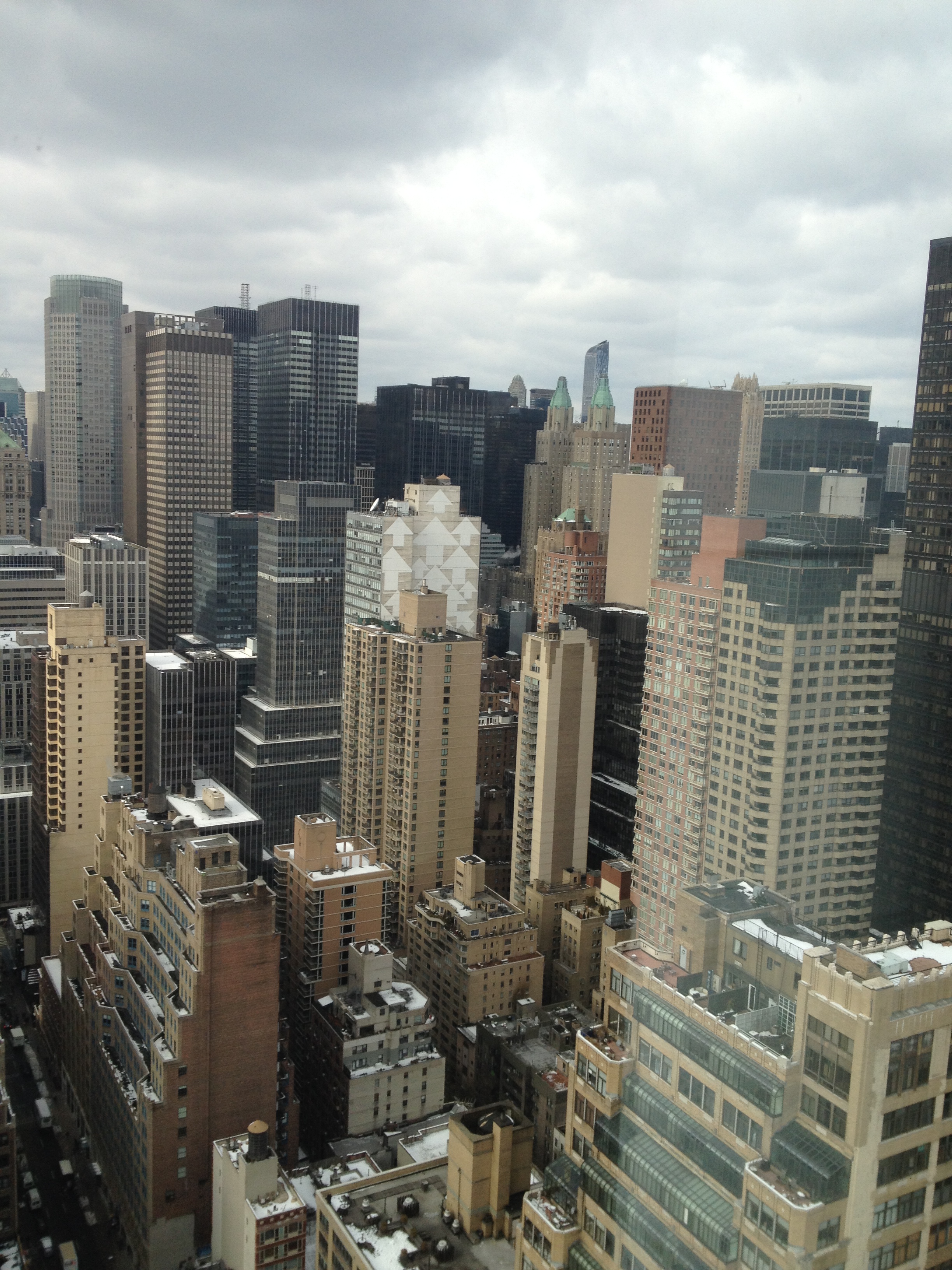
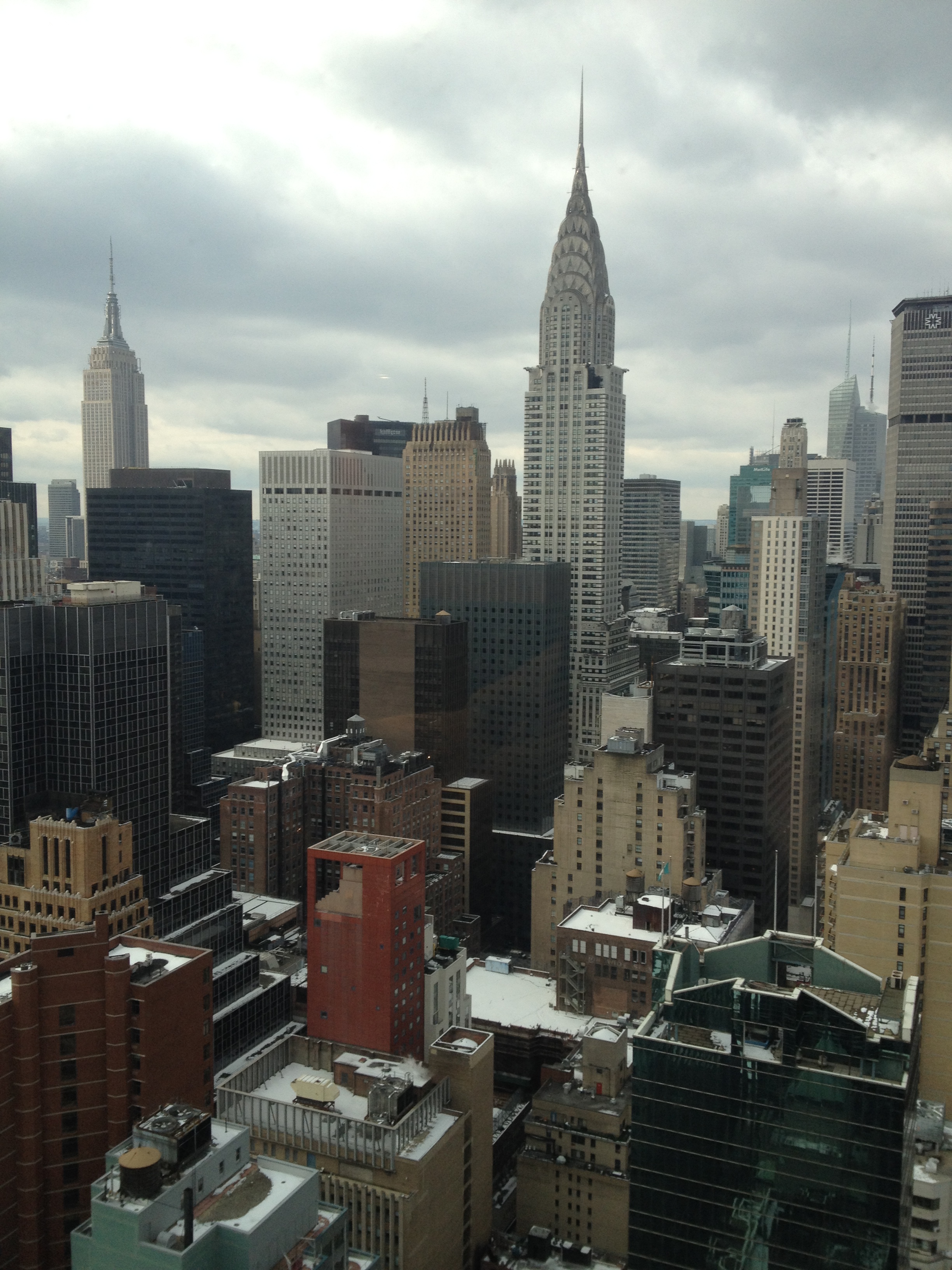
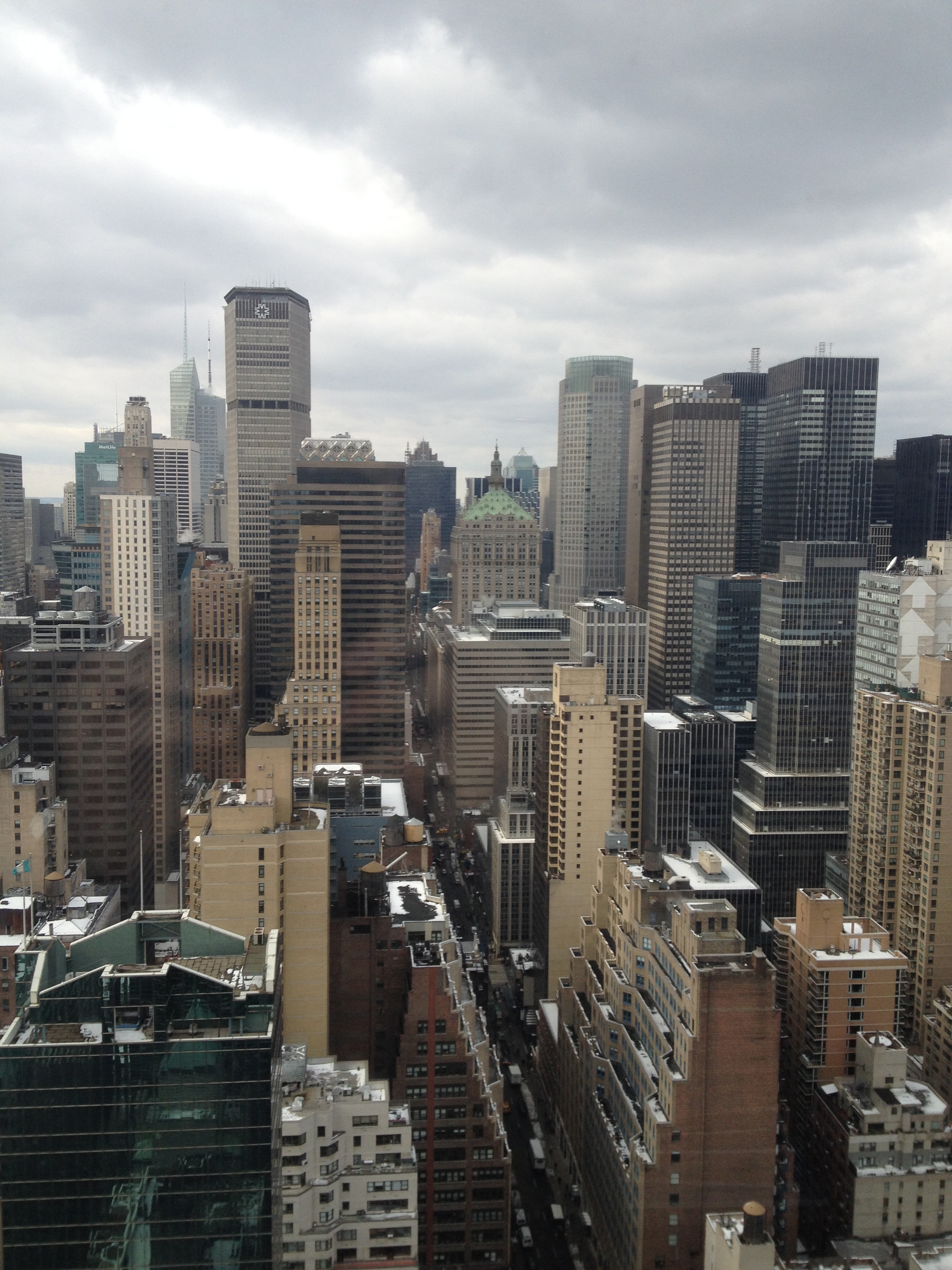
The hotel itself was nice, and the employees were extremely helpful and courteous. I have to say though, from an accessibility standpoint, I was disappointed. There are two towers in the building, the East Tower and West Tower. My classmates were in the West Tower, and I was in the East Tower (or was it the other way around?). In order to get to the tower they were staying in, I had to go up three stairs. That may not seem like much, but when you are in my situation, that might as well be an entire flight of stairs. The other option was to go outside, walk to the other building, and enter there, but I thought that was ridiculous, so I didn’t go over. I didn’t think too much of it. After all, the view outside my room was breathtaking.
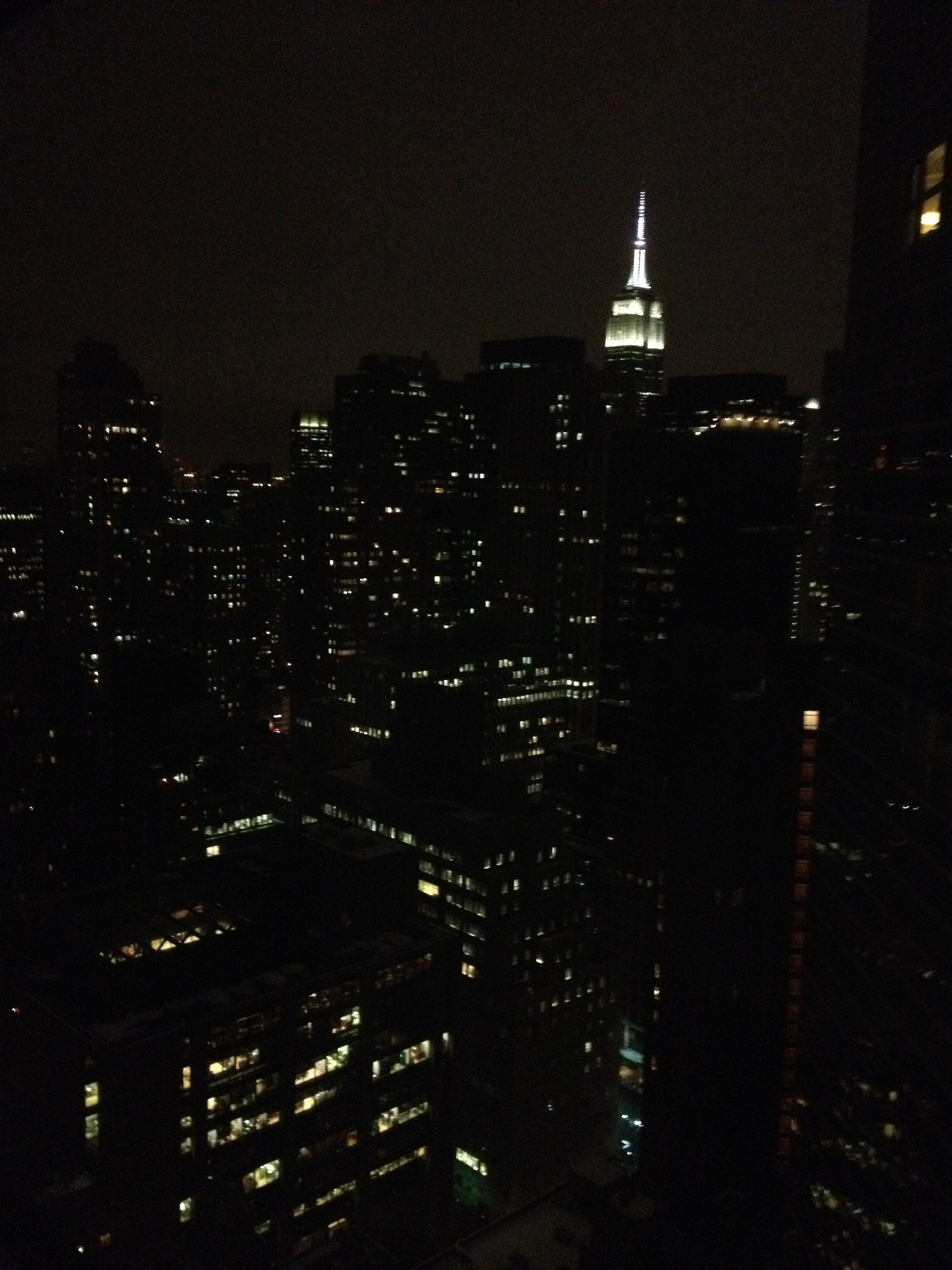
photo (4)
My hotel room view.

The next morning I headed downstairs to meet my classmate for breakfast before our interview. I got to the lobby, walked over to the restaurant, only to see that it was down a staircase. I was astonished.

This building was built in the 1970s, which, although that predates the Americans with Disabilities Act, should mean that everyone can easily access the hotel restaurant. Instead, I had to flag down the concierge and have him lead me the way, which if I recall the steps correctly, was to go up to the 2nd floor, walk through the restaurant kitchen, go down two levels in the service elevator, and exit the kitchen. I felt like I was trespassing. For someone in a wheelchair, it would have been difficult, maybe impossible, to navigate the kitchen.

So yeah, that was a little frustrating. Fortunately, the day more than made up for it. I had a great interview, and a positive experience at the company’s headquarters. People were extremely friendly, and I was given all the assistance I needed to navigate the offices. Fingers crossed I’ll hear some good news this week!

After the interview, I went back to the hotel, changed in my friend’s hotel room (I had to bite the bullet and go up the stairs), then camped out and took a nap on one of the chairs in the hotel lobby. Meanwhile, my classmates decided to be Lewis & Clark and walk up and down the city. When they eventually made it back from their three-hour voyage, we took an Uber to Penn Station (shout out to Sherwyn our driver who was secretly a Pats fan!) and headed to the train. Well, first we had to fight off crowds of crazed travelers. New York walkers have three speeds: fast, faster, and I’m going to run you over. It was 5:15 on a Friday, so it wasn’t surprising that everyone was hustling and bustling. It was an obstacle course not to get trampled on or bumped into, as I would most definitely have gone down. I learned long ago to stay out of the way when in crowds. Somehow, I survived unscathed and on my feet.

We arrived back in Boston around 10:15, and I was home by 11. I was exhausted after a long day. I slept until noon on Saturday (and could have slept all day if I didn’t have midterms to study for next week).

All in all, the trip was worthwhile. I got to leave my Boston shell for a day, and build confidence for the future that I can go somewhere big and relatively unknown and stay standing. If all goes well, maybe I will be back here in the summer.

photo (2)
The view from my classmate’s hotel room.

photo photo (3) photo (1)

MIT Media Lab

The MIT Media Lab is a place I had wanted to see for many years. Visiting was on my to-do list over winter break, however as I stared at my calendar, it was already January 7th and I hadn’t yet made it across the river. Class would start back up in five days, and once classes started, I knew deep down I probably wouldn’t make it over to Cambridge for quite awhile. If I didn’t go today, I probably wouldn’t go before break ended.

For those not familiar with the Media Lab, it is more or less a giant research lab. According to their website, The MIT Media Lab “goes beyond known boundaries and disciplines, encouraging the most unconventional mixing and matching of seemingly disparate research areas.” It combines the expertise of numerous fields under one roof, ranging from bionics to electrical engineering to computer science. It is truly on the cutting edge of innovation throughout the world. If you could summarize MIT in one building, this would be it.

photo 1
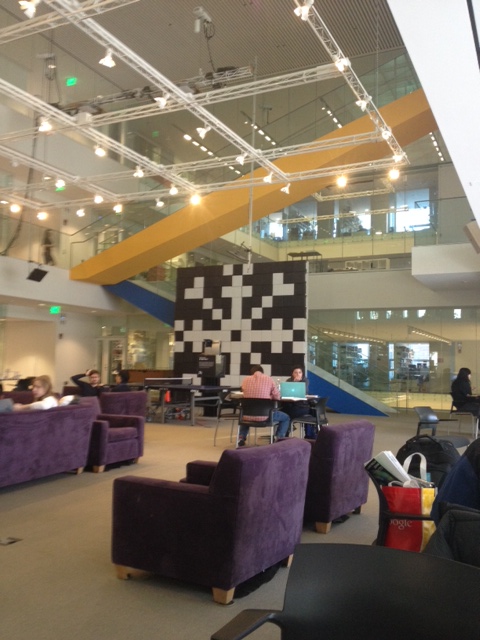
Lounge area on the 3rd floor of the Media Lab

Naturally, over the last few years, I had been curious to know if this type of place could create something that could improve my life, in any possible way. There had to be some sort of research going on that could somehow help me. Then one day I got my answer. I had stumbled upon a TED Talk by Hugh Herr, who runs the MIT Biomechatronics Lab on the second floor of the building. A double amputee below the leg, Herr walks around on cutting edge prosthetic legs, and has committed his career to building comfortable, better-performing limbs, in order to make them feel as close to the real thing as possible. Gone are the days of peg legs and immobile titanium rods, that’s for sure.

What captivated me about the talk occurred midway through the presentation, when he showed a quick video sequence of a man testing out an exoskeleton, a machine that could augment the strength of one’s legs. It would be perfect for someone with muscle weakness.

I pressed rewind and watched it again. And again. And again. This is what I needed, I thought. Even better, they were located right in my backyard.

After months of trying to get an “in” – they don’t accept unsolicited requests to tour the lab due to time constraints and the volume of requests – I was connected to a PhD student, Benny, who offered to give me a tour of the lab.

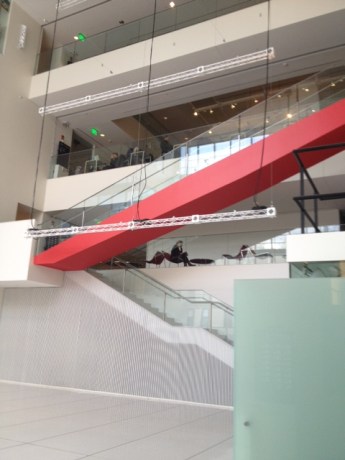
When I got to the Media Lab I walked into a large, open atrium filled with natural light that happened to shine particularly bright that day. I walked over to what I thought was the map of the building, only instead it was a touch screen asking where I wanted to go. This is MIT after all; if the map can’t be interactive and touch-enabled, it doesn’t belong in the lobby. After a few seconds I found where I needed to go and proceeded to the second floor.

I met up with Benny and got a tour of the lab. It was a very interesting visual experience, and definitely not a place for the claustrophobic. There were machines and spare parts everywhere. It was hard to move around without bumping into a wooden plank or a computer or, you know, a gigantic 3D printer. To be fair, they had just combined spaces with another lab and had yet to move everything to its final resting place. Nonetheless, it was an exciting environment to be in.

Benny took me on a tour, showing the history of prosthetics, from hard plastic limbs without any flexibility to customized limbs based on the individual’s particular needs. The 3D printer I bumped into? It was printing a customized sleeve made out of a flexible material that would be placed on a human, then slipped into the prosthetic limb for maximum comfort and performance. It was incredible to see the progress in the field in such a short period of time. Soon, we are going to have prosthetic limbs that perform equivalently to a human’s real limb.

Towards the end of the tour I got a glimpse at the area where they tested out the exoskeleton in the TED Talk video – the reason I had been so interested in the lab in the first place. Going in I didn’t know what to expect, however I secretly hoped that there might be something I could try on. My expectations were quickly tempered – I found out it is still in the rudimentary stages, and unfortunately what they have now is below the knee, which wouldn’t be of help to me. That said, the equipment and resources available to them suggest that they aren’t far from a breakthrough in the coming years.

I left the lab with a greater sense of the time it is going to take before this type of technology can really catch on. It was good to know, but at the same time, it pushes the timeline out that much more before something is developed that can help me with walking. As I’ve reminded myself thousands of times, like a parent scolding a child, I just have to be patient.

photo 4
Zig-zagging stairs off the main atrium


Besides, I didn’t have much time to let myself sulk, as I had another meeting at 2pm. This meeting was with William Li, a PhD student and lecturer for a class that I participated in as a client in the fall called Principles and Practice of Assistive Technology (PPAT). I had an idea come to me during a stressful apartment hunt last year for a website that showed relevant accessibility information for buildings, so that someone with a disability could easily plan a trip safely and with minimal aggravation.

William and I discussed some follow-ups on how to make this website a reality. I had worked with some MIT computer science undergrads last semester and created a working prototype, however it is far from done. It will take a lot of work to turn it into a living, breathing site, and I am already quite overwhelmed by the demands of the upcoming semester. But it is an idea that I believe is worthwhile, and I refuse to let it die.

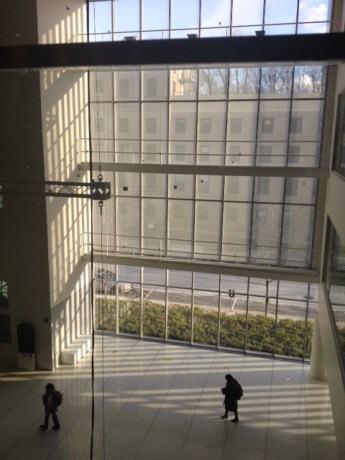
Before I knew it the sun was starting to go down after a productive afternoon. As I left the Media Lab, the sun shone its last remaining rays brightly over the atrium. I looked up at the floors above, and marveled at the possibilities of the future being developed all around me. The research that could have a positive impact on my life never happens linearly, and on a selfish level, it never progresses as fast as I would like, whether the research is medicinal or mechanical. But it progresses, at its own pace, each discovery building on the last. With the technology and information available today, research is progressing faster and faster, thanks to innovative, collaborative efforts such as the Media Lab.

The time will come where all this groundbreaking research will positively impact my life. In the meantime, I just have to be patient.

photo 2
Atrium as the sun begins to set.


Courage

I woke up Sunday morning to the awful news of Stuart Scott’s passing. Although any death is tragic, his especially hurt. He was an influential figure for me growing up, as I transformed into the ravenous sports fan that I am today. Scott’s tenure on SportsCenter coincided with my coming of age. Every time I flipped over the pillow and felt the coolness against my face, his iconic catchphrase came to mind. Every time I held a roll in my hand and reached for the butter, I cracked a smile. The entertainment factor he brought to SportsCenter was unlike any other anchor to set foot in Bristol. Sure, some anchors are entertaining, but their personalities are merely an evolution of Scott’s. He was the reason they crack the jokes they do today. He was the trailblazer. Any time Stuart Scott hosted, it became must-see TV, even if SportsCenter came on at 1am on a school night.

I will remember him for the laughs he provided, but more importantly, for how he conducted himself in his final years battling cancer. Since 2007, his legacy transformed from being a source of humor to being a source of courage. Reading his obituary on Sunday, I learned that he worked out at an MMA gym in my hometown of West Hartford, CT. That brought chills down my spine. I am honored that he chose to battle back against this awful disease in West Hartford, and fought his fate in my hometown until the very end.

His ESPYs speech last year was one for the ages. Like Jim Valvano in 1993, it would be a speech that unfortunately preceded a passing a few short months later. Scott’s words inspired me that night, just like they inspired millions of others.

I have learned a lot from people fighting cancer. I hope it is a fight I never have to face. Their battle puts into perspective how insignificant my fight is every day with a muscle disease. Looking back on the blog post I recently wrote about pain, my troubles feel so small compared to what cancer patients have to go through. My situation is quality of life threatening; theirs is life-threatening. Yet, between Scott, Valvano, and other heroes of mine such as Randy Pausch and my dear friend Carly Hughes, I have shining examples of how to live life. When people are faced with a life-threatening illness, it is easy to give up. Instead, more often than not, you see someone who truly values each and every day, down to the most minute detail. Sunshine. A warm breeze through an open window. The taste of ice cream. Things we take for granted, valued to the utmost. That is the attitude of someone who has learned the meaning of life.

To fight cancer with a positive attitude is to personify the meaning of courage. Stuart Scott believed until the day he died that he was going to beat this disease, never caring to know what stage he was in, because he didn’t want to change his approach to fighting it. Carly knew she was going to win up until the final moments. It’s funny; we always seem to read that someone “has lost their battle with cancer”.

I don’t see it that way at all.

Stuart Scott would also disagree. “When you die,” he would say in his speech, “it does not mean you lose to cancer. You beat cancer by how you live, why you live and in the manner in which you live.” If you live to be 100 but you don’t live a meaningful life, with treasured relationships and genuine love, is that better than living to be 49, and truly understanding the beauty of every moment?

There are few diseases in which there is a tangible, physical cure. To cure a disease mentally is even tougher. There is no doubt that in the way Stuart Scott lived, he cured cancer in his mind.

His attitude applies to any disease, whether or not it’s life-threatening. For people afflicted with a disease, too often we see our lives through a distorted, demented lens. It is easy to let life be defined by this lens; I can attest to that. To be able to come to peace with your circumstances, and to accept that your disease is a fact of life comparable to your age, or to the color of the sky – that is winning the battle. As Valvano said at the end of his iconic speech, “Cancer can take away all of my physical abilities. It cannot touch my mind, it cannot touch my heart, and it cannot touch my soul.”

At the conclusion of his own iconic speech, Scott said something that particularly resonates with me to this day: “Live! Fight like hell. And when you get too tired to fight, then lay down and rest and let somebody else fight for you.”

He has joined the hallowed group of people who have won their battle, even if they are not here on this Earth in the physical form. On the days where I need that extra push, or feel that I can’t get through the day, they fight my disease when I am down and help me make it to the next day in one piece. They are my inspiration to keep moving forward on this bewildering, sometimes lonesome road I find myself on.

Stuart Scott has left behind many catchphrases and quotes that I will recite for years to come, but when I think of him going forward, on those days where I feel bad for myself or fall down or am in a great deal of pain, two words will stand out above all else:

Thank you.


Stuart Scott’s speech:

Jim Valvano’s speech:

The Breaks of the Game

Over the last couple months I have experienced a series of muscle pulls that have tested my threshold for pain. The resulting discomfort affected my mood, and often forced me to stop what I was doing and lie down with a heating pad. If I happened to be in class, I resorted to pain medication, which sometimes worked and sometimes didn’t. Every time this type of pain occurs, on top of my day-to-day aches, it frustrates me to no end. My productivity evaporates into thin air as my concentration shifts from the task at hand to dwelling on the discomfort. Quite simply, my tolerance for pain is not where it needs to be given its prevalence in my life.

Pain, discomfort, soreness, aching – if you have a neuromuscular disease, you experience it all. Last March I attended the Muscular Dystrophy Association’s Clinical Conference in Chicago, and one of the speakers presented on the topic of pain and how it is often a forgotten symptom for someone with a muscle disease. Thinking of my own experience visiting doctors, it sometimes got pushed to the back burner, behind assessing my loss of strength and writing prescriptions for mobility aids. Of all the talks at the conference, it stuck with me the most, and I wrote about it in a blog post during my time there.

Pain is a tough subject for me to share my personal experience, for I always feel like I am complaining when I know full well that others have it worse. I don’t have to go far in my own life to know that.

But the pain I do experience I have to deal with better, because it exists in some form all throughout the day. From the moment I wake up in the morning, I am greeted by the unwelcome presence of stiffness and soreness. After spending hours lying down, I wake up and my body is newly stiff and sore. After rising, I limber up and shower and it temporarily subsides, but it often comes back in greater magnitude later in the day. Occasionally the pain doesn’t diminish to a level where I can tough it out and I take ibuprofen which provides temporary relief. Sometimes though, especially if the discomfort originates in my neck or shoulder, it causes a tension headache that radiates to the top of my head and sinuses, which causes my head to pound mercilessly. If I don’t catch the pain in time I am left with a thankless dilemma: take ibuprofen to ease the shoulder and neck pain, or take Excedrin to eliminate the headache. I go for the headache each time, as that ends up being the most debilitating pain.

It is what it is. I say that casually because, to be honest, it has been a part of my life for so long that I can’t remember what life was like before my tendons stretched and my joints scraped against one another. I can’t remember the last time I had perfect posture or was fully limber.

For patients with more progressive disabilities that use a wheelchair, the pain can be much worse. Imagine being in a chair all day, every day. Your muscles begin to tighten, cramps and strains develop, and you can’t go anywhere. You can’t adjust your body well enough to take the pressure off of where it hurts.

This could very well be my future, or it could not. As I mentioned before, I don’t handle my current level of pain very well to begin with. Just a little bit of pain can make me miserable, and render me unable to focus on classwork or whatever task is at hand. There are days when I’ve woken up and have felt perfectly calm, perfectly devoid of feeling. This moment of bliss, even though I don’t take it for granted, is usually shattered moments later by something as mundane as drying my hair with a towel, or getting up out of a chair. I perform the activity, then turn my head and bam, a shooting pain in my neck. I move my neck around and it’s still there. It remains with me the rest of the day, tugging at my concentration, testing my endurance and tolerance. And I crumble. It throws a wrench in my day, and I either get an excruciating migraine from the tension or am unable to do much of anything besides lie down and wait for pain meds and a heating pad to work their (temporary) magic.

Worse, part of the pain is exacerbated by fear and anxiety – the pervasive gnawing at my soul that my pain and discomfort may very well get worse before it gets better. Then there is the worry of what could happen if, the next time I fall, I hear a snap, followed by unimaginable agony. It has happened to other patients with my disease. I’ve read the horror stories of someone reaching for something on a shelf, losing their balance, and breaking a leg. Or the person who tripped on an uneven sidewalk and fractured a hip. Then there was the woman on the MDA Facebook page who, I presume in a moment of extreme frustration, posted a picture of her x-ray showing a compound leg fracture for the world to see, followed by her swollen, discolored leg after surgery.

I think about what that pain would feel like, hoping and praying that I never encounter it. I shudder to think about it – I know I shouldn’t – but I have to live with this possibility. Not only would a break like that be the end of walking as I know it, it would cause me pain that I’ve never experienced before. If I struggle with the pain and discomfort I feel now, how am I supposed to cope with a break?

These thoughts sometimes overwhelm me, but I have to remember to take it one day at a time. I have to focus on the now, and make sure that every step I take in the present is the safest one possible. That’s all that I can do. It would be reckless for me to deny the possibility of breaking a bone in the future, but at the same time it’s unhealthy to let this fear consume me. In a quest for inspiration in the face of adversity, I’ve been turning to other examples of people who have had to endure far worse anguish than my own.

It’s funny how life often directs you exactly where you need to go.

A few weeks ago I was watching television (which I rarely do anymore), and came across the trailer for Unbroken. I hadn’t heard of the movie, or the book it is based off of up until then. Since I am on break, I decided to purchase the book, and I’m glad I did.

Sometimes it is refreshing to read about people who overcome adversity, including pain, no matter how severe. The book, by Laura Hillenbrand, is about Olympic runner and WWII POW Louie Zamperini. His life, and all that he had to endure, is nothing short of remarkable. Although I haven’t had a chance to finish the book yet (I will in the next couple of days), the anguish he encountered surviving on a raft in the middle of the ocean for 47 days, followed by the pain from constant beatings as a prisoner of war, is unfathomable. Broken bones, concussions, illness, starvation, thirst; he experienced it all.

Yet he overcame. He endured. His human spirit could not be broken, hence the title of the book. I am amazed by each page that I read – to think he lived to be 97 after all that he went through is mind-boggling. I am running out of words to describe “it can’t be believed”, because it just…can’t.

I don’t think I’ve ever been punched before (and would like to keep it that way), but I have whacked my head on a cabinet door, or recoiled and hit my head on a wall, and it hurts. To get consistently beaten, day after day, requires an extreme tolerance of pain, and enormous mental strength.

But it shows what can happen when you master pain. You defeat it. Pain doesn’t go away by wishing it away. You might take drugs or medicine and it goes away temporarily, but it always comes back.

I have to get better at dealing with the discomfort, because my pain wont go away quietly. I need a better attitude. There are definitely other ways to attack the problem. I have heard the benefits of altering one’s diet to reduce inflammation, and am trying to incorporate this diet into my day-to-day life by eating smarter and more strategically. Perhaps that will offer some relief. Sure, there are some alternate forms of pain relief out there, but at the end of the day, the pain will always come back as it is a chronic condition. Overall, I need to improve my mindset.

As humans, we are capable of mastering pain. I must put my mind to defeating it by not letting it destroy my spirit. I need to break the grip of pain from my life before it breaks me.


Trident Booksellers

logo

I hadn’t been to Newbury Street in a couple years, except when someone has made the fateful decision to drive down it. Between jaywalkers who don’t look up at approaching traffic, double-parked cars, and police activity, it is impossible to go more than a few blocks in 15-20 minutes. For the most part, Newbury Street contains everything I’m trying to avoid: crowds of people wandering aimlessly (*cough* tourists), brick sidewalks, and buildings with stoops.  Don’t get me wrong, it is a gorgeous street, especially around the holidays. However, I’ve been down this street countless times since I’ve lived in Boston, so I at least know the area and don’t feel too nostalgic missing out on it. That said, part of what I’m trying to do now is to re-introduce myself to areas that I’ve subconsciously sworn off since my disease decreased my mobility. I don’t go out nearly as much as I used to, but I am committed to changing this, as long as it takes. Blogging gives me the fun excuse I need.

Since winter break has just started, I figured this was as good a time as any to change my hermetic habits. Newbury Street, in all its hustle and bustle and annoyance, would be quite a challenge off the bat. But, like MacArthur returning to the Philippines, I returned triumphantly.

My destination was Trident Booksellers, tucked between Mass Ave. and Hereford Street. It was a place I had been meaning to go to for a while, a famous bookstore/cafe that combines three things I love: books, food, and MBTA memorabilia. I had never been inside, so I had this preconceived notion that it would be this quaint little bookstore with a side cafe, where people sipped lattes quietly while perusing the internet on their Macbooks.

I was wrong. Well, I was right about people on their Macbooks, but it wasn’t the quiet, quaint store that I thought.

Mirroring the gift-seeking, meandering crowds of people outside, it was actually a lot busier than I expected. It took a few minutes to get comfortable with my surroundings, as the store was arranged in a haphazard manner, with the checkout counter, cafe, and aisles of books all converging in one spot when I walked in. This setup made for foot traffic going in every direction, which, for someone who needs to be careful with each step I take, was a bit harrowing. But hey, I could actually go in the store, which I can’t say for most old buildings unfortunately. Trident does have a second floor which has a long, winding staircase to access, and as you can imagine I did not go up there. So yes, this is really only a half a review. I have no clue what is up there, so I apologize. Everything I needed though was on the first floor.

Today I met my friends Mike and Claudia for brunch. The Trident menu is quite expansive, encompassing both breakfast and lunch. When given the choice between the two I always opt for breakfast, specifically french toast. You can tell a lot about a restaurant by how their french toast tastes – what type of bread they use, the toppings offered, even the quality of their bacon on the side. Although I opted against bacon today (come to think of it, I’m not sure why), the french toast was on challah bread, and came with a side of strawberries and whipped cream. It was fantastic. Looking at what other people got around me, you really can’t go wrong with what you order here. The portions are generous and the food is hearty. The main dining area was a bit cramped, but at no point did I feel uncomfortable that I couldn’t get by the other tables okay on my crutches.

Afterwards, jittery from far more coffee than I probably should have consumed, I walked around the store. Since I didn’t bring a backpack I couldn’t purchase anything that I had to carry with my hands, which is actually a great strategy to save money. Otherwise, I tend to want to buy everything I can reasonably lug in my backpack.

Overall it was a great experience and I’d go back again. It was a little busier than I am comfortable with (from a pure safety perspective), however I was there during peak business hours – a Saturday afternoon right before Christmas. Accessibility-wise I’d say it is adequate, especially for Newbury Street which has a lot of old buildings I can’t get into. As I’ve learned rudely over the years, older buildings do not have to abide by accessibility standards outlined in the Americans with Disabilities Act. Yay human rights!

In all seriousness, I have to focus on the places I can go. The more places I find around the city that are accessible, the more inclined I will be to get out of my neighborhood, which at the end of the day is the important goal. So far, so good.

By the way, I can’t think of Trident and not think of Anchorman!

Reflection

Looking back to August, my main concern was surviving business school orientation. Those three days were a whirlwind: meeting new people, getting acclimated to chaos, all while trying to come to grips with the demands about to be placed on me. In the months since, I’ve survived about as well as I could have hoped. The end of the semester is in sight. In the blink of an eye it is already Thanksgiving; it is crazy how time flies.

The constant stress and hectic pace have worsened my muscle disease, which I knew would happen when I made this decision. Experiencing it in real time is frustrating. I am in constant fear of falling and getting hurt, and being too weak to perform basic daily tasks. I still worry that I will not make it through the entire program in one piece. But I must press on. Fear is not an excuse to stop.

More importantly, I have a lot to be thankful for. Thanksgiving break is the perfect time to remind myself of why this struggle is worth it.

First and foremost, I am thankful for the people I am surrounded by in my life. My parents mean the world to me. I am more reliant on them now than at any point since I was a young child. I have a wonderful sister and a young niece whom I adore. My friends – what can I say – they have seen my worst days, and my best. They are always there for me when I need them.

I am also thankful to have made so many friends already at Boston College. Although the small size of the class wasn’t my only reason for deciding to attend the program, it has made all the difference in enabling me to thrive. People know who I am, and they know what I am dealing with. I have taken advantage of the platform of Eagle Talk, a sort of TED talk for our MBA class, to tell my life story, and it has lifted a tremendous weight off my shoulders. People know what I am going through now and understand my vulnerabilities.

Second, I have my health. I’ve been sick a few times this first semester, as I got acclimated to being a student again and being in a building full of germs. When I am sick I am miserable, especially since I am so weak. However, it has given me a great appreciation for my overall health. I also know others who are going through much worse. Keeping this perspective is very helpful. Besides love, there is no greater wealth in the world than being healthy. We only get one shot at this life.

Lastly, I am doing what I want to be doing, even though I don’t yet know what I want to be doing. That may seem ridiculous, but it isn’t. I am motivated by change – making a positive change in my own life (furthering my education, and hopefully my income), and in the lives of others. I want to help as many people as I can, especially those with disabilities. The MBA program will lead me in that direction. I am beginning to understand my true purpose, which I realize is something that not a lot of people can say.

My condition is not something that I enjoy. But with a little reflection, and some time off to breathe, I get to see that there is so much more to life than my frustrations. Life is worth fighting for, every minute of every day.